Do They Make Copper Solder? A Practical Guide
Learn whether copper solder exists, the common copper-based alloys, and how to choose and use copper-containing solders in electronics, jewelry, and plumbing applications.


Yes, you can buy copper-based solders, but they are typically described as copper-containing alloys rather than pure copper metal. In practice, most copper soldering uses tin-copper or tin-silver-copper blends, with flux and proper heat management required. Copper-based solders are common in electronics, jewelry, and plumbing where lead-free formulations are preferred.
Do they make copper solder? A concise overview
Do they make copper solder? The short answer is yes, but not in the form of pure copper metal. In practice, copper solder products are described as copper-containing alloys or as tin-copper (Sn-Cu) and tin-silver-copper (Sn-Ag-Cu) formulations. The SolderInfo Team notes that copper-based solders are widely manufactured for areas where lead-free options are required. They are particularly relevant in electronics, jewelry fabrication, and plumbing where copper substrates are common and compatibility with flux is critical. This article explores what copper solder is, how to pick the right alloy, and how to solder copper reliably. According to SolderInfo, understanding alloy families helps prevent joint failures and improves long-term durability.
Common copper-based solder alloys
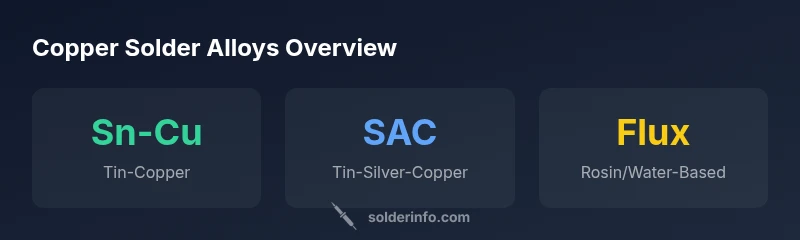
Copper solder alloys come in a few broad families, each with distinct properties and typical uses. Tin-copper (Sn-Cu) alloys are common for general-purpose, lead-free joints; tin-silver-copper (Sn-Ag-Cu, or SAC) blends are favored for high-reliability electronics due to excellent solderability and mechanical strength; copper-rich formulations sometimes appear in specialty solders designed for copper-heavy substrates. Flux choice, surface cleanliness, and precise heat input strongly influence performance, so selecting the right alloy depends on the substrate material, expected service temperature, and whether the joint will see vibration, humidity, or thermal cycling.
Applications and suitability
Copper-based solders have broad applicability, spanning electronics, jewelry making, and plumbing. In electronics, SAC alloys are common for surface-mount and through-hole joints when lead-free performance matters. In jewelry, copper-containing solders enable bright joints on copper and copper-alloy pieces, often used with fluxes designed for precious metals. Plumbing uses copper and copper-containing solders alongside compatible fluxes to join copper piping and fixtures. The key is to match the alloy to the substrate: electronics prefer lower-temperature, clean-flux joints, while plumbing and jewelry may tolerate different heating profiles and joint aesthetics.
How to choose the right copper solder
Choosing the right copper solder starts with understanding your substrate and service conditions. First, identify whether you are soldering electronics, jewelry, or copper plumbing, and select an alloy family accordingly. Second, consider the melting range and compatibility with your flux; some fluxes are designed for rosin-core solders, others for water-soluble formulations. Third, evaluate the heat input your process can tolerate and the joint geometry. Fourth, verify cleaning requirements after soldering to prevent oxidation and corrosion.
A practical approach is to start with a common lead-free Sn-Cu or Sn-Ag-Cu alloy for general-purpose work and adjust based on observed wetting, flow, and joint strength. Always test on scrap material before committing to a critical part. The goal is reliable, repeatable joints with minimal oxidation and clean finishes.
Practical soldering workflow for copper alloys
Prepare the surfaces by cleaning with appropriate solvent or flux residue removal. Apply flux to the joint and pre-tin the copper if needed to promote wetting. Heat the joint with a suitable iron or torch, then introduce solder at the heated area, allowing capillary action to draw the alloy across the joint. Remove heat once the joint is properly wetted, and inspect for smooth, shiny surfaces without gaps. Use tack soldering for larger joints to prevent movement during final soldering. Allow joints to cool without disturbance to avoid cold joints or micro-cracking.
Common pitfalls and safety considerations
Oxidation and surface contamination are the biggest enemies of copper solder joints. Always ensure clean surfaces, appropriate flux, and correct heat levels. Flux fumes can irritate eyes and lungs, so use good ventilation and personal protective equipment. Lead-free alloys can require slightly higher temperatures than traditional Sn-Pb solders, so be mindful of substrate tolerance to heat. Store flux and solder properly to prevent drying out or corrosion, and keep solder ingots dry to avoid moisture-related porosity. For jewelry and electronics, avoid overheating to prevent substrate damage and oxidation.
Copper solder vs traditional leaded solders: pros and cons
Pros of copper-based solders include adherence to lead-free regulations, compatibility with copper substrates, and strong, reliable joints in many conditions. Cons include potentially higher cost, variable wetting behavior across alloys, and a need for careful flux selection. Leaded solders historically offered easier wetting and lower processing temperatures, but their use is restricted in many applications due to regulatory concerns. Weigh these factors against your project requirements, heat tolerance, and regulatory environment.
Maintenance and storage of copper solder
Store copper solder and flux in a cool, dry place away from moisture to prevent degradation. Keep solder ingots in sealed containers to avoid oxide formation. Use clean tools and avoid cross-contamination with different alloy types, which can cause brittle joints or altering wetting characteristics. Regularly check flux expiration dates and replace when necessary, as stale flux reduces wetting performance and joint reliability.
Future trends and availability
The industry trend leans toward more lead-free options and alloys optimized for copper substrates. As electronics shrink and plumbing codes tighten, copper-based solders that offer reliable wetting and mechanical strength while minimizing toxicity remain in demand. Solder manufacturers continue refining Sn-Cu and SAC formulations to balance wettability, melting temperatures, and corrosion resistance. For professionals, staying informed about new flux chemistries and processing tips helps maintain high-quality joints across electronics, jewelry, and plumbing applications.
Copper-based solder types and their common applications
| Solder Type | Typical Use | Key Considerations |
|---|---|---|
| Sn-Cu (lead-free) | Electronics & plumbing | Lower-temperature variants available; good wetting with proper flux |
| Sn-Ag-Cu (SAC) | Electronics & precision joints | Widely used in modern electronics; higher cost; excellent reliability |
Quick Answers
Are copper-based solders the same as copper brazing alloys?
No. Soldering uses low-melt alloys to join parts at relatively low temperatures, while brazing uses significantly higher temperatures and brazing fillers. Copper-containing solders are designed for delicate joints, whereas brazing is for stronger, thicker joints.
Copper soldering and brazing are different processes—soldering is lower heat and often for electronics or jewelry, brazing uses higher heat for stronger copper joints.
Can you use lead-free solder on copper pipes?
Yes, lead-free solders are commonly used for copper piping, provided the alloy is compatible with the pipe material and flux. Follow local codes and ensure proper cleaning and flux selection to prevent leaks.
You can use lead-free solder on copper pipes when you choose the right alloy and flux. Check local codes.
What flux should I use for copper soldering?
Flux choice depends on the alloy and joint type. Rosin-based fluxes work well for electronics and jewelry; water-soluble fluxes are often preferred for plumbing but require thorough cleaning to prevent corrosion.
Choose rosin-based flux for electronics or jewelry; water-soluble flux works for plumbing if you clean well afterward.
Is copper solder safe for electronics around other metals?
Copper-based solders are generally safe for electronics when used with compatible flux and proper shielding. Keep moisture and contaminants away from joints and follow manufacturer recommendations for flux residue removal.
Copper solders are safe if you use the right flux and keep joints clean and dry.
Where can I buy copper solder and related fluxes?
Copper solder and fluxes are widely available from electronics distributors, jewelry supply shops, and plumbing suppliers. Availability may vary by region and supplier size.
You can buy copper solder and flux from electronics, jewelry, or plumbing suppliers depending on your location.
“Copper-based solders offer a practical, lead-free path across electronics, jewelry, and plumbing when used with the right flux and heat management. Substrate preparation and alloy selection are the keys to durable joints.”
Top Takeaways
- Begin with copper-containing alloys, not pure copper metal
- Match alloy family to substrate and heat tolerance
- Flux choice is critical for reliable joints
- Lead-free options are common across electronics, jewelry, and plumbing
- Practice on scrap pieces to develop repeatable results