What Solder for Zinc: Best Alloys and Practical Tips
A data-driven guide from SolderInfo on choosing solder for zinc, covering surface prep, alloy options (lead and lead-free), flux guidelines, and practical steps for bare zinc, galvanized surfaces, and zinc alloys.


Quick Answer: When soldering zinc, you can use traditional tin-lead alloys (such as 60/40) or lead-free options (like SAC305), but zinc’s oxide skin and heat sensitivity demand careful surface preparation, rigorous flux use, and strict temperature control. For galvanized zinc, many professionals avoid direct soldering and opt for mechanical joints or brazing, testing on scrap first and avoiding overheating to prevent zinc damage. What solder for zinc requires thoughtful prep and conservative heat management.
What solder for zinc?
If you are asking what solder for zinc, the short answer is that zinc can be joined with standard solders, but you must respect zinc's oxide skin and heat sensitivity. In 2026, electronics and metalwork professionals commonly use tin-lead 60/40 or lead-free SAC alloys for zinc joints, combining careful surface prep with appropriate flux. For galvanized zinc, many practitioners avoid direct soldering and consider alternative methods or the base metal only after removing the zinc coating. Always test on scrap before committing to a live joint, and keep heat below the zinc's burn threshold to prevent distortion or hydrogen embrittlement. The goal is to balance solder compatibility with zinc's tendency to oxidize and blister if overheated.
In practice, choosing the right solder for zinc hinges on the specific application: electronics-grade zinc (thin, plated, or alloyed) vs. structural zinc parts used in plumbing or jewelry. Leaded solders generally melt at lower temperatures and can be easier to work with on clean zinc surfaces, but environmental and health considerations push many to lead-free formulas. Soldering zinc is a nuanced task that rewards meticulous preparation, conservative heat, and a clean, compatible flux.
Surface preparation for zinc: cleaning and oxide removal
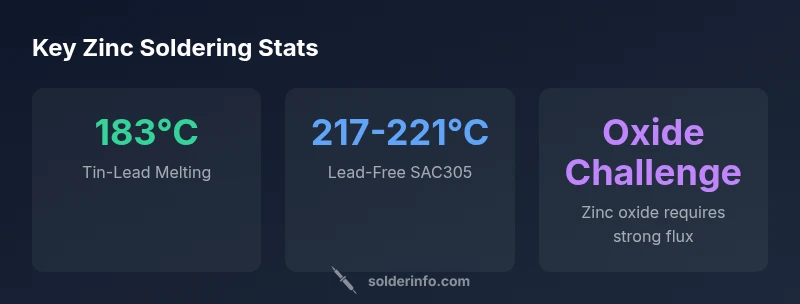
Zinc surfaces quickly form a protective oxide layer that can impede wetting by solder. Effective surface preparation is essential. Start with thorough cleaning to remove oils, grease, and residues. Mechanical abrasion with a fine abrasive pad or sandpaper (neutral grit) helps break through the oxide skin and improves solder flow. After abrasion, wipe with a suitable solvent or isopropyl alcohol and allow the surface to dry completely. For galvanized surfaces, consider removing the zinc coating in a small area or at the joint itself to reach the bare base metal before soldering, while taking steps to minimize galvanic interactions. Use flux designed for active metals; rosin-based flux can work on some zinc surfaces, but anodized/protected finishes may require stronger activators. Always test on scrap zinc to confirm good wetting before making a real joint.
Alloy choices for zinc: lead vs lead-free options
When selecting a solder for zinc, alloy choice matters. Traditional tin-lead alloys (e.g., 60/40) are familiar and melt at relatively low temperatures, which can ease wetting on clean zinc. Lead-free options, such as SAC305, operate at higher temperatures but are favored for environmental reasons and regulatory compliance. For zinc, the choice often hinges on ensuring the oxide layer has been adequately addressed and the heat is controlled to avoid zinc damage. In electronics contexts, Sn63/Pb37 is a classic eutectic that provides a sharp melting point and predictable joints; for lead-free routes, SAC305-like compositions are common, though they require careful heat management and robust flux. Always tailor alloy choice to application, thickness, and joint type, and consult supplier data sheets for compatibility with zinc surfaces.
Flux considerations when soldering zinc
Flux plays a pivotal role in overcoming zinc's oxide layer. Active or acid fluxes can aggressively break down oxides on zinc, enabling better wetting, but they must be used carefully to avoid corrosion of surrounding metals and assay residues. Rosin-based fluxes are gentler and suitable for some zinc applications, especially when heat is moderate and joints are small. In contrast, for galvanized zinc or heavily oxidized surfaces, an activator-rich flux may be required, followed by thorough cleaning after soldering to remove corrosive residues. Always work in a well-ventilated area and observe safety guidelines for flux fumes. If you’re unsure, test on scrap components and refer to the flux manufacturer’s instructions.
Practical soldering workflow for zinc: step-by-step
- Inspect the zinc surface and ensure it is free of oils, grease, and corrosion. 2) Lightly abrade the area to break the oxide layer and wipe away debris. 3) Apply an appropriate flux and allow it to activate. 4) Pre-damp the solder tip and begin heating the joint with gentle, even heat; avoid overheating, which can cause zinc to burn or warp. 5) Apply solder to the joint, not directly onto the iron tip, and allow surface tension to draw the solder through the joint. 6) Inspect the joint for wetting, ensuring a smooth fillet without gaps. 7) Clean flux residues if necessary and allow the joint to cool undisturbed. 8) If the joint fails to wet properly, rework from the cleaning stage, as repeated heating can damage zinc.
Alternatives and best-use scenarios: when to braze, weld, or mechanically fasten
Soldering zinc has limitations that must be weighed against alternatives. For structural or load-bearing joints in zinc components, brazing or welding with compatible brass or bronze alloys may yield stronger joints with better long-term stability. Mechanical fastening with rivets or screws, especially in galvanized assemblies, can provide robust joints without the risk of zinc oxidation. Jewelry work on zinc often benefits from soldering small, decorative joints with precise heat control and refined fluxes. Consider the intended service environment, required joint strength, and corrosion exposure when choosing between soldering and alternatives.
Soldering zinc scenarios and how to approach them
| Scenario | Recommended Solder Type | Flux Type | Notes |
|---|---|---|---|
| Bare zinc metal | Sn63/Pb37 or lead-free SAC305 | Rosin-based flux | Ensure clean surface and controlled heat for reliable wetting |
| Galvanized zinc (zinc-coated) | Lead-free SAC305 or Sn63/Pb37 after removing coating | Active flux where needed; post-cleaning essential | Direct soldering to galvanized layer is challenging; evaluate base metal |
Quick Answers
Can you solder directly to zinc without flux?
Flux is essential when soldering zinc because of the oxide layer that forms rapidly. Without flux, solder will not wet the surface properly, leading to weak joints. Always use an appropriate flux and clean the joint after soldering to remove any residue.
Flux is essential for zinc; without it, the joint won’t wet properly. Use the right flux and clean afterward.
Is lead-based solder safe for zinc applications?
Lead-based solders have good wetting on zinc but introduce environmental and health concerns. Where permitted, Sn63/Pb37 can work well for small, controlled zinc joints, but many projects today favor lead-free alloys due to regulations and safety considerations.
Lead-based solders work, but health and environmental concerns make lead-free options preferable today.
What heat settings are safe when soldering zinc?
Keep temperatures as low as practical for the joint and monitor the process to avoid scorching the zinc or causing oxide formation. Start with a hot enough tip to wet the joint quickly, then reduce heat to prevent distortion or burning.
Use minimal heat; start hot enough to wet, then back off to prevent damage.
Can I solder galvanized zinc to copper?
Direct soldering of galvanized zinc to copper is rarely recommended due to oxidation and coating interactions. If a joint to copper is required, remove the galvanized coating at the joint, prepare both surfaces, and consider alternative joining methods or post-solder cleaning strategies.
Avoid direct soldering on galvanized zinc; remove coating at the joint if needed and consider alternatives.
What are good alternatives if soldering zinc isn’t reliable?
If soldering zinc proves unreliable, consider mechanical fastening, brazing with brass or bronze fillers, or epoxy-based bonding for non-structural joints. For jewelry or delicate parts, precision silver brazing or soldering on compatible alloys may offer better reliability.
If soldering fails, switch to mechanical fastening or brazing as appropriate.
“Zinc presents a unique set of challenges for soldering due to its oxide layer and relatively low tolerance for heat. With proper surface prep and the right flux, you can achieve reliable joints on zinc surfaces.”
Top Takeaways
- Start with clean, oxide-free zinc surfaces.
- Choose solder alloys with compatible melting points and good wetting on zinc.
- Use appropriate flux and control heat to avoid zinc damage.
- Galvanized zinc often requires avoiding direct solder joints; consider alternatives.
- Test on scrap pieces before committing to a live joint.