Solder or Braze Copper Pipe: A Thorough Comparison
Compare soldering and brazing copper pipe to decide which method fits your project. Learn about tools, codes, safety, and best practices from SolderInfo for reliable joints.


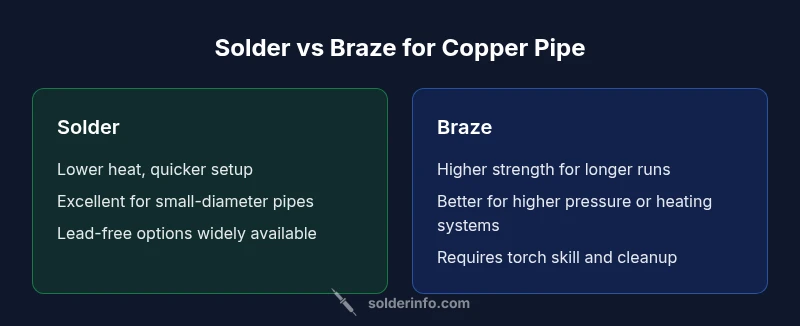
Solder is typically chosen for small-diameter copper pipe in residential work due to simplicity and speed, while braze is preferred for larger diameters or higher-pressure systems and where codes require a brazed joint. The right choice depends on pipe size, system pressure, and local codes. This guide from SolderInfo outlines when to use each method and how to prep joints for reliability.
Understanding the Basics of solder or braze copper pipe
Joining copper pipe can be accomplished through soldering or brazing, two metallurgical methods that use a filler metal to create a sealed joint. In the context of copper piping, soldering typically relies on a low-temperature filler metal used with flux to cap joints, while brazing uses a higher-temperature filler metal to form a strong joint capable of withstanding greater pressures. From the perspective of the SolderInfo team, understanding the distinction between "solder" and "braze" for copper pipe becomes essential when planning a project, selecting materials, and aligning with local codes. The core idea is that both processes create a metal bridge between pipe sections, but the heat, flux, and filler material dictate performance, service life, and code acceptance. Solder or braze copper pipe decisions should consider pipe diameter, operating pressure, and accessibility of joints, as well as the desired longevity of the installation. This article presents a practical comparison, practical tips, and code-aware guidance for hobbyists, plumbers, and professionals alike.
Key Differences Between Solder and Braze for Copper Pipe
The most obvious difference is temperature: soldering uses relatively low heat and a filler metal that melts at a lower temperature, while brazing requires higher heat and a filler with a higher melting point. Flux plays a critical role in both methods by cleaning copper surfaces and preventing oxides that would weaken a joint. Joint strength typically increases with brazing, making braze more suitable for larger diameter pipes or high-pressure systems, whereas soldering is often adequate for small-diameter domestic runs. Compatibility with existing fittings and the specific code requirements in your jurisdiction also influence the choice. Solder joints can be more forgiving of imperfect preparation, but brazed joints tend to be more durable in environments with vibration or thermal cycling. This section lays the groundwork for applying either method in real-world projects, with emphasis on preparation, cleanliness, and heat control.
When to Choose Solder for Copper Pipe
Solder is commonly the go-to method for small-diameter copper pipes in home plumbing where speed, simplicity, and accessibility matter most. If the system operates at standard domestic pressure and temperatures, and if fittings are compact with limited bending, soldering offers a straightforward workflow: cut, deburr, clean, apply flux, assemble with filler metal, and cool. Solder is particularly attractive for retrofit work in tight spaces where a brazing torch may be cumbersome. For hobbyists and DIY installers, soldering often presents a lower equipment hurdle and faster turnaround. The flexibility of lead-free solder and pre-flux options reduces setup time without sacrificing safety when proper ventilation is observed.
When to Choose Braze for Copper Pipe
Braze is preferred when pipe sizes increase beyond small-diameter ranges or when the system experiences higher pressures or thermal cycling, such as in some radiant heating or certain HVAC applications. Brazing creates robust joints that tolerate flex, vibration, and longer runs where leaks would be highly disruptive. Code-conscious projects may require brazed joints, particularly in commercial or multi-unit installations. Braze also offers strong performance with certain copper alloys and can be more forgiving of joint misalignment if performed with proper technique. This section helps you decide when to allocate the extra time and equipment that braze typically demands.
Tools, Materials, and Safety Considerations
Choosing between solder and braze begins with the right tools: a compatible torch setup, flux, and the appropriate filler metal. For soldering copper pipe, you’ll typically use flux, lead-free solder, and basic hand tools like a pipe cutter and deburring tool. Brazing requires a more robust torch setup, brazing filler metals (often brass or silver-bearing alloys), and heat-control accessories to prevent overheating. Safety cannot be overstated: work in a well-ventilated area, wear eye protection, and manage heat sources to prevent burns or fire hazards. Adhere to local codes and standards, and keep a fire extinguisher nearby. Solder or braze copper pipe joints must be thoroughly cleaned and prepped to ensure a reliable bond. This section delivers practical guidance and cautions to support safe, code-compliant installations.
Step-by-Step Comparative Scenarios
Scenario A: Small-diameter domestic water line
- Shut off water and relieve pressure. 2) Cut to length and deburr. 3) Clean and flux the joint area. 4) Fit the pipe with the appropriate filler metal. 5) Apply heat with a torch, monitor the joint, and remove heat once the filler metal flows. 6) Quench and inspect for gaps. Scenario B: Larger pipe in a heating system
- Prepare pipe sections and fittings. 2) Use an appropriate brazing method with torch setup if brazing. 3) Apply filler metal evenly, maintain clean joints, and cool gradually. 4) Inspect for micro-leaks and test pressure. These step-by-step checklists illustrate how to approach common copper-pipe projects with either solder or braze, emphasizing cleanliness, heat control, and post-assembly inspection.
Practical Troubleshooting Tips
Even skilled technicians encounter leaks or imperfect joints. Common fixes include re-cleaning the joint surfaces, reapplying flux, and reseating the joint. For soldered joints, overheating can cause oxidation and weak bonds, while insufficient heat can prevent proper flow of filler metal. In brazed joints, heat must be managed to avoid overheating filler metal or warping copper pipes. If leaks persist, consider resealing with the correct filler metal and re-testing after cooling. Always verify with a pressure test or leak test after any repair, and document the method used for future maintenance or code compliance.
Maintenance and Longevity Considerations
Proper maintenance extends joint life. Inspect exposed copper joints regularly for signs of corrosion, leaks, or discoloration, especially in areas with frequent temperature changes or vibration. In home systems, address leaks promptly to avoid water damage and mold growth. Keep an eye on the accessibility of joints; brazed joints in remote locations may require periodic inspection due to potential thermal cycling. Use compatible cleaners and avoid abrasive scouring that can degrade flux residues. Routine checks help ensure your soldered or brazed copper pipe network remains airtight and efficient for years.
Cost and Availability Considerations
Costs for solder versus braze vary with diameter, project scope, and local labor rates. Soldering tends to require less equipment and simpler setup; the consumables are widely available and affordable for small jobs. Brazing often demands a more capable torch, a wider range of filler metals, and possibly more specialized training or experience. Availability of materials and technicians familiar with brazing can also influence cost. When evaluating a project, balance upfront tool and material costs against long-term reliability and maintenance needs, and consider whether local codes favor one method over the other.
Environmental and Code Considerations
Local plumbing codes govern whether solder or braze is required, and some jurisdictions mandate brazed joints for specific systems. Lead-free solders are strongly recommended for potable water plumbing to minimize lead exposure. Ensure adequate ventilation when using flux and metal filler metals, and follow safety guidelines to protect yourself and the environment. Brazing decisions should consider joint exposure to heat and the potential for dissimilar metal reactions. Always reference the applicable codes and standards, and consult with a licensed professional when in doubt. Authority sources provide deeper context for safety and compliance, reinforcing the practical approach outlined by SolderInfo.
Comparison
| Feature | Solder | Braze |
|---|---|---|
| Typical joint strength (qualitative) | Moderate for small-diameter, low-pressure runs | High strength for larger diameters or higher-pressure systems |
| Required heat | Lower heat and simpler setup | Higher heat and more equipment handling |
| Flux and filler material | Flux-based solder with lead-free options | Brazing filler metal (e.g., brass or silver-bearing alloys) |
| Ease of use | Generally quicker for small jobs | More steps and care for larger or critical systems |
| Code compatibility | Widely accepted for many residential scenarios | Often preferred or required for certain commercial/HVAC applications |
| Equipment cost | Lower initial investment | Higher equipment and material costs |
| Best for | Small-diameter domestic piping and quick repairs | Larger diameters, high pressure, or code-specified brazed joints |
Advantages
- Lower equipment and skill barrier for small jobs
- Faster repairs with readily available consumables
- Good for retrofit work in tight spaces
- Broad code acceptance for many residential scenarios
Cons
- Lower joint strength under high stress and thermal cycling
- Higher risk of leaks if joints are not prepared properly
- Lead-containing solders should be avoided in potable water lines
- Brazed joints require more intense heat control and cleanup
Solder is best for small-diameter, low-pressure copper piping; braze is preferable for larger runs, higher pressure, or code-mandated joints.
Choose solder for quick, smaller domestic plumbing tasks. Opt for braze when the installation demands higher strength, larger diameter joints, or local codes specify brazed joints. Always align with safety guidelines and code requirements from authorities.
Quick Answers
What is the fundamental difference between soldering and brazing copper pipe?
Soldering uses filler metal that melts at a lower temperature to bond copper joints, while brazing uses a higher-temperature filler metal for stronger joints. Both require flux to clean surfaces and prevent oxidation. The choice depends on pipe size, pressure, and code requirements.
Soldering uses lower heat to join pipes; brazing uses higher heat for stronger joints. The right choice depends on pipe size, pressure, and local codes.
Can I solder copper pipe in a high-pressure system?
Soldering can be sufficient for small, low-pressure domestic lines, but high-pressure or large-diameter systems often favor brazing. Always consult local codes and perform pressure testing after completing joints.
It’s usually fine for small domestic lines, but for high pressure, brazing is safer and often required by code.
Do I need special flux for soldering versus brazing copper pipe?
Yes. Soldering uses flux to clean and promote solder flow, while brazing uses flux and specific brazing filler metals that require different heat management. Ensure your flux is compatible with the chosen filler metal and the copper alloy.
Flux helps metals bond; choose the right flux for either solder or braze and follow the product instructions.
Are there safety concerns with using lead-based solders on potable water lines?
Lead-based solders are discouraged for potable water due to health risks. Use lead-free solders in residential and commercial potable-water installations and check local codes for compliance.
Avoid lead-based solders for drinking water; use lead-free options and follow local code guidance.
How do I test a soldered or brazed joint for leaks?
After cooling, perform a pressure test or soap-test on joints to identify leaks. Inspect visually for gaps, and rework joints if you see any moisture or corrosion.
Test the joints with pressure or soapy water and recheck for leaks after repair.
What codes should I check before soldering or brazing copper pipe?
Check local plumbing codes and standards, which may specify whether solder or brazing is required for certain systems. In many jurisdictions, both methods are acceptable with the right materials and procedures protected by codes.
Always verify with local codes before starting; codes guide whether you solder or braze.
Top Takeaways
- Choose method by pipe size and pressure
- Follow local plumbing codes and safety guidelines
- Prepare joints meticulously with proper cleaning and flux
- Weigh equipment cost against project scale
- Consider future maintenance when selecting solder vs braze