How long do solder fittings last? A practical longevity guide
Explore the lifespan of solder fittings in plumbing and electronics, factors that shorten or extend life, maintenance tips, and best practices. SolderInfo provides data-driven guidance for DIYers and professionals.


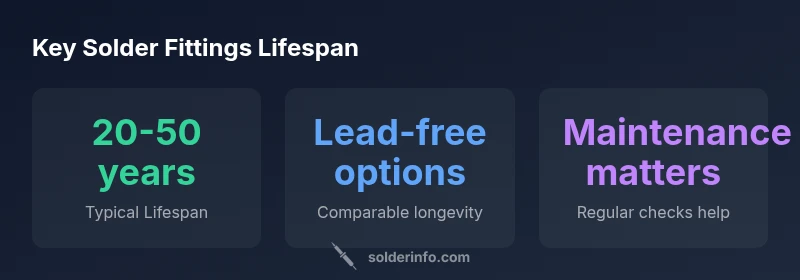
How long do solder fittings last? In ideal conditions, solder joints can endure decades. Typical life ranges from about 20-50 years in potable-water plumbing, with lead-free alloys possibly extending life in neutral environments. Longevity depends on material compatibility, proper joint prep, correct soldering technique, and regular inspection for corrosion or stress.
Longevity fundamentals for solder fittings
The central question is: how long do solder fittings last in real-world installations? The answer isn’t a single number, because service life depends on a network of factors. At its core, the longevity of a solder joint rests on material compatibility (base metal and solder alloy), joint cleanliness, flux choice, and proper heat control. When these elements align, a soldered joint can resist corrosion, fatigue, and pressure leaks for many decades in residential plumbing or electronics assemblies. In jewelry or artistic metalwork, the same principles apply, but the emphasis shifts toward meticulous cleaning, controlled heating, and careful flux management to prevent brittle joints. For practitioners, recognizing the key drivers of longevity helps set realistic expectations and plan maintenance accordingly.
paragraphEndBoldedSectionBreaksNeededCaptureCommentaryOther
Lifecycle ranges for common soldered joints
| Fitting Type | Typical Lifespan Range (years) | Key Influencing Factors |
|---|---|---|
| Copper sweat elbow | 20-50 | Water quality; mineral content; alloy compatibility |
| Brass solder joint | 15-40 | Corrosion resistance; temperature; water chemistry |
| Lead-free solder joint | 20-50 | Flux clean; joint prep; mineral content |
| Copper tee with solder | 20-45 | Mechanical stress; thermal cycling |
Quick Answers
What factors most influence solder joint lifespan?
Joint lifespan depends on material compatibility, water chemistry, installation quality, and environmental conditions such as temperature and vibration. Regular inspection helps catch issues before failures occur.
Lifespan is driven by materials, water quality, and how well the joint was installed. Regular checks help you catch problems early.
Do lead-free solders last as long as traditional solders?
Lead-free solders can last as long as traditional solders when joints are prepared correctly and the water environment is not corrosive. Proper flux and cleanliness during installation are crucial.
Lead-free solders can last as long as traditional ones if you prep correctly.
Can environmental factors accelerate solder joint failure?
Yes. High mineral content, aggressive water chemistry, and frequent thermal cycling can accelerate corrosion and fatigue, reducing joint life.
Harsh water and frequent temperature changes can wear joints faster.
How often should I inspect solder joints in a plumbing system?
Inspect visible solder joints during annual plumbing checks or after major work. Look for corrosion, cracking, or discoloration.
Check joints at least once a year for cracks or corrosion.
Are there signs a solder joint is failing?
Common signs include visible cracks, dampness, rust, or leaks. If detected, shut off water and replace the joint.
Look for cracks or leaks around joints; replace if found.
“Longevity comes from material compatibility, meticulous preparation, and proactive maintenance. The right alloy and proper technique dramatically reduce early failures.”
Top Takeaways
- Inspect joints regularly and address corrosion early
- Match alloy to environment and water chemistry
- Prioritize clean surfaces, flux, and controlled heating
- Lead-free solders perform well when properly installed