How to Solder Stainless Steel Jewelry: A Comprehensive Guide
Learn how to solder stainless steel jewelry with confidence. This guide covers surface prep, flux selection, tools, step-by-step technique, and finishing for durable, professional results.


Master clean, secure bonds when soldering stainless steel jewelry by focusing on surface prep, compatible flux and solder, and exact heat control. Stainless steel resists wetting, so begin with thorough cleaning and abrasion, choose a stainless-specific flux, and apply steady heat to avoid warping. Practice on scrap pieces to refine your technique.
The Challenges of Soldering Stainless Steel Jewelry
Soldering stainless steel jewelry presents unique challenges that hobbyists and professionals must respect. Stainless steel forms a chromium oxide layer that resists wetting, which can hinder solder flow and lead to weak joints if not addressed properly. The SolderInfo team notes that surface condition is the biggest predictor of success: the cleaner and rougher the bonding surface, the better the solder will adhere. In practice, this means careful cleaning, light abrasion, and an appropriate preparation sequence before heating. Stainless steel also has higher thermal mass than many base metals, so heat control becomes essential to avoid heat-affected zones that distort detail or warp thin pieces. Practitioners should plan for longer heat cycles and frequent pauses to inspect joints under magnification. Finally, choosing the right flux and a compatible solder is crucial; using materials designed for stainless steel helps maintain wetting and alloy compatibility. For beginners, consider practicing on test rings or clasps before attempting a finished piece. By approaching each joint with a consistent prep and heating protocol, you’ll minimize failures and maximize repeatable results.
According to SolderInfo, the biggest gains come from combining meticulous surface prep with the right flux choice and a controlled heat profile. This approach reduces the risk of poor wetting and dull joints, especially on harder stainless steel alloys. With patience and repeat practice, even small links and delicate bezels can be soldered cleanly and reliably.
Surface Preparation and Fluxes for Stainless Steel Jewelry
Getting a reliable solder joint on stainless steel starts long before the flame touches the metal. A clean, properly prepared surface is essential because stainless steel resists wetting and can form stubborn oxides. According to SolderInfo, the most important prep steps are mechanical cleaning, light abrasion to reveal bright metal, and a conservative chemical rinse to remove oils and residues. Start with a lint-free wipe, then scour with a non-wiber abrasive pad (e.g., a fine Scotch-Brite) to remove the oxide layer without creating deep scratches. Rinse and dry thoroughly. For joints that require extra adhesion, apply a thin layer of flux formulated for stainless steels, or a flux paste designed for jewelry work. Flux serves two roles: it displaces air at the interface and protects the surface from oxidation during heating. After preparing both mating surfaces, dry-fit the components to ensure a clean, even joint line. Good flux coverage is crucial; apply it sparingly and avoid pooling. If plating or finish is present, consider masking to protect surrounding areas. Finally, remember that flux alone cannot guarantee success—consistent heat and clean joints are the true drivers of a durable bond. The result should be a joint that wets evenly and maintains symmetry under magnification. SolderInfo analysis shows that thorough surface prep and compatible flux significantly improve joint reliability when soldering stainless steel jewelry (SolderInfo Analysis, 2026).
Solder Types and Compatibility for Stainless Steel Jewelry
Choosing the right solder is as important as cleaning the metal. Stainless steel often requires solders formulated for higher-temperature joints and corrosion resistance. Look for lead-free jewelry solders designed to work with stainless steel alloys, and confirm the solder’s compatibility with the specific stainless grade you are using. In practice, many jewelers favor silver-bearing or high-temperature flux-assisted solders that flow smoothly on prepped surfaces. The key is to match the solder’s melting range with your torch settings and the thickness of the metal. Start with thinner gauges for delicate pieces and thicker gauges for broader links. Always test a small angle or scrap piece first to dial in heat and flux behavior before committing to a finished piece.
Tools, Safety, and Workspace Setup
Set up a well-ventilated workspace with a stable, heat-resistant surface. Use a jeweler’s torch or micro-torch designed for jewelry work, mounted securely to prevent tipping. Clean gloves and eye protection are essential, and a fireproof mat or brick should sit under the bench area to catch any slips. A clamp or third-hand tool helps hold parts steady during soldering, reducing the need to touch hot metal. Keep a damp cloth handy to quench small scraps and to test heat transfer on a scrap piece. Always work in a room with good airflow and use appropriate fume extraction if needed. Safety first ensures consistent results and minimizes the risk of accidents.
Step-by-Step Process Overview
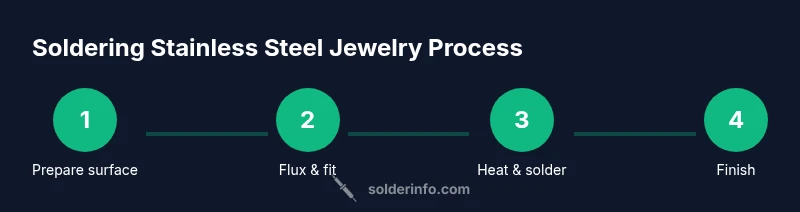
The basic workflow for soldering stainless steel jewelry involves four core stages: inspection and prep, flux application and fit-up, controlled heating and solder flow, and final inspection and finishing. By planning each stage and measuring temperature with care, you reduce the chances of overheated joints and warping. Practicing on scrap pieces before attempting a finished project helps you identify heat control and flux issues without risking valuable components.
Common Mistakes and Troubleshooting
Common mistakes include skipping surface prep, using the wrong flux type, overheating the piece, and failing to dry surfaces thoroughly. Overheating can cause warping or discoloration, while poor flux coverage leads to oxidized joints. If a joint refuses to wet, re-clean the surfaces, re-apply flux, and reduce heat input. If the metal darkens or oxidizes, allow the joint to cool slowly and clean before re-soldering. Regular practice with test pieces improves your ability to judge heat and flux behavior, leading to better consistency.
Finishing, Polishing, and Quality Check
After soldering, quench the joint in water or pickling bath as appropriate, then gently file or sand to remove excess solder and refine the joint line. Use a magnifier to inspect the seam for gaps or voids, and polish with a soft cloth or buffing wheel to restore luster without damaging surrounding finishes. For high-visibility jewelry, a final pass with a bright polish ensures a mirror-like finish that buyers expect. Recording your process and results can help you identify what works best for each stainless steel alloy and piece type.
Tools & Materials
- Soldering torch (butane or propane) or micro torch(Choose a controllable flame and a heat source comfortable for long sessions)
- Flux suitable for stainless steel(Prefer a flux formulated for stainless steel or make a precise flux paste for jewelry)
- Solder appropriate for stainless steel jewelry(Lead-free jewelry solder designed for stainless alloys; match melting range to piece thickness)
- Soldering picks, tweezers, and clamps(Hold parts precisely and prevent shifting during heating)
- Mechanical cleaner (fine Scotch-Brite pad)(Lightly abrade to reveal bright metal without deep scratches)
- Polishing cloth or wheel(Use after soldering for final finish)
- Heat-resistant bench protector or fire brick(Protect the work surface and control heat spread)
- Safety gear (eye protection, gloves, ventilation)(Always wear PPE and ensure adequate ventilation)
Steps
Estimated time: 60-90 minutes
- 1
Prepare the work area
Set up a stable, well-ventilated workspace. Place the bench protector, clamps, and tools within easy reach. Confirm your piece design and keep all scrap pieces nearby for testing heat and flux behavior.
Tip: Have a dedicated scrap piece ready to test heat before working on the actual component. - 2
Clean and abrade the contact surfaces
Wipe with solvent to remove oils, then lightly abrade the bonding surfaces with a fine Scotch-Brite pad to create a uniform, matte surface. Rinse and dry completely before fluxing.
Tip: Do not ove-abrade; mild abrasion is enough to improve wetting without roughening the jewelry design. - 3
Apply flux and fit parts
Coat the mating surfaces with a thin, even film of stainless flux. Dry-fit the parts to ensure accurate alignment and a close seam. Adjust as needed before heating.
Tip: Avoid flux pooling at the seam, which can cause solder to run unevenly. - 4
Heat gradually and introduce solder
Apply heat with a steady, evenly distributed flame. When the joint reaches the appropriate temperature, touch the solder to the seam so it flows smoothly into the joint.
Tip: Keep the flame moving to avoid hot spots and discoloration. - 5
Inspect and quench
Withdraw heat when the solder flows and the seam looks uniform. Quench in water or as recommended for the alloy, then examine the joint under magnification.
Tip: If needed, reflow the joint after cleaning and another pass of flux. - 6
Finish and polish
Lightly file any excess solder, then polish the joint and surrounding area to restore shine without removing detail. Inspect for uniformity and symmetry.
Tip: A bright finish highlights a well-executed solder seam.
Quick Answers
Is soldering stainless steel jewelry reliable?
Yes, with proper prep, flux choice, and heat control, stainless steel jewelry can form strong, durable joints. Practice on scraps to refine technique and avoid warping.
With the right prep and heat control, stainless steel jewelry joints can be reliable. Practice on scraps to master the technique.
What flux should I use for stainless steel jewelry?
Use flux designed for stainless steel or flux paste formulated for jewelry. Avoid generic flux that may not protect against oxidation on stainless surfaces.
Choose a flux designed for stainless steel to protect against oxidation during heating.
Can I solder stainless steel without heating evenly?
No. Stainless steel requires careful, even heating due to its higher thermal mass. Use a steady flame and slow heat ramp to prevent warping.
Stainless steel needs even heating; use a steady flame and slow ramp to avoid warping.
What finishing steps follow soldering?
Quench safely, remove oxidation, file excess solder, and polish the seam for a seamless look. Use magnification to verify joint integrity.
After soldering, quench, clean, file excess solder, and polish for a seamless finish.
Are there safety concerns when soldering stainless steel?
Yes. Ventilation, flame control, PPE, and a clean workspace are essential. Always follow manufacturer safety guidelines for your tools.
Yes, ensure good ventilation and PPE, and follow safety guidelines for tools and heat.
Watch Video
Top Takeaways
- Prep the surface thoroughly before soldering.
- Choose flux and solder compatible with stainless steel.
- Control heat to protect geometry and finish.
- Inspect joints under magnification and finish carefully.