Understanding the Cost of Soldering Jewelry Rings
Learn the factors driving solder rings together cost, compare DIY vs professional options, and understand how metal, design, and finishing choices shape your jewelry budget. Practical tips and a clear pricing framework.


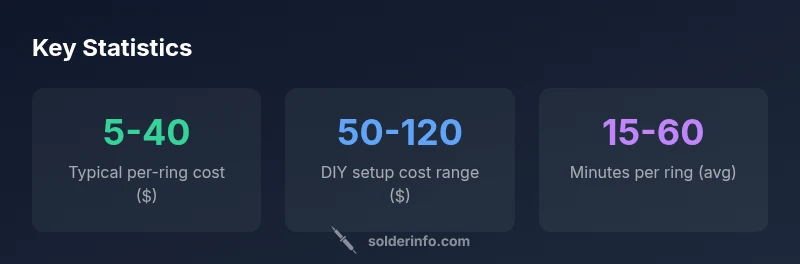
The cost to solder rings together typically ranges from $5 to $40 per ring when performed by a professional jeweler, depending on metal, design complexity, and finishing. DIY setup costs, materials, and risk can lower or raise this price, but professional work ensures reliable joints and finish. Solder rings together cost varies widely by metal and craftsmanship.
Cost structure of ring soldering
In professional jewelry work, the price to solder rings together is driven by a mix of labor, materials, and post-processing. Labor covers setup, alignment, heat control, and finishing. Materials include solder, flux, and consumables, while post-processing accounts for pickling, polishing, and quality checks. Location and shop overhead also factor into quotes. The SolderInfo Team notes that the relationship between metal cost and labor intensity often drives the final price. A typical shop will price per ring to reflect both the time and the skill required to ensure a durable, clean joint. For DIY enthusiasts, upfront investment in tools will shift some cost into the initial outlay, but can reduce per-ring charges over repeated work.
Metal types and their price impact
Metal choice hugely affects soldering cost. Gold is more expensive and demands careful temperature control to avoid damage; silver is cheaper but may require different flux; copper is typically the most affordable but may require more attention to oxidation. Beyond material costs, precious metals call for precise finishing to avoid scratches and ensure durability. Solder joints in gold rings often demand tighter tolerances and more meticulous finishing, which increases both time and price. Solder type and flux compatibility further influence the final cost and success rate of the joint.
Solder types and finishes and their cost implications
Solder comes in several grades (difficulty levels) and is chosen based on metal composition and joint requirements. In jewelry, hard solder generally costs more for its stronger bond and higher heat demands. Finishes like high-polish or rhodium plating add to the labor and materials bill. Electroplating, if used for color or durability, adds additional steps and costs. The SolderInfo Analysis highlights that compatible flux and clean surfaces reduce waste, which helps keep costs predictable.
Complexity and design impact on cost
Rings with intricate milgrain edges, pave stones, or inside engraving require more prep work and precise alignment. Each additional feature adds setup time, risk of error, and finishing steps. Complexity compounds quickly: even small design elements can multiply labor hours. When designing for soldering, consider how many joints, if any stones, and the finish will influence the final quote. The studio approach often yields better outcomes but at a higher price.
DIY vs professional: cost comparison and budget planning
DIY projects can save money on labor but demand investment in tools, safety gear, and training. A beginner kit may entail costs that recover over multiple rings, but missteps can waste materials and require rework. Professionals provide consistent results and warranties, which may offset higher per-ring pricing when durability matters. Budget for prep, heat management, finishing, and potential rework when planning.
How to estimate quotes and what to ask
Request a written estimate that itemizes metal, solder type, labor, finishing, and any rework fees. Ask about minimum charges for small jobs and whether turning a ring around quickly affects the price. If resizing or additional design elements are involved, request a timeline and a breakdown of each step. Clear communication helps avoid surprise costs and delays.
Long-term value: durability, warranties, and rework costs
Durability matters for longevity and resale value. A strong solder joint that withstands wear reduces the likelihood of future repairs, which can save money over time. Check if the shop offers warranties and what rework fees apply if the ring needs adjustment after delivery. The right balance of price and craftsmanship delivers the best long-term value.
Pricing drivers for ring soldering work
| Factor | Cost Implication | Notes |
|---|---|---|
| Base metal | Gold (14k/18k) increases cost | Higher material cost and refining required |
| Ring design complexity | Intricate settings raise labor | More time to align and finish |
| Joint type | Hard solder vs. pre-formed | Heat management and waste risk |
| Finish options | Polish and plating add cost | Extra steps for high shine |
Quick Answers
What is the typical cost to solder two rings together by a jeweler?
Prices vary by metal and complexity; expect labor, setup, and finish charges. Always request a written estimate.
Prices vary by metal and design; ask for a written estimate.
Does gold or platinum significantly increase soldering cost?
Yes. Precious metals raise material costs and can require more precise processing.
Yes, precious metals raise costs due to material value and process needs.
Can I DIY solder rings cheaply?
DIY can lower labor costs but needs tools, safety gear, and skill; mistakes can waste materials.
DIY saves money but requires skill and safety.
How long does ring soldering take?
Typical jobs run 30 to 90 minutes, depending on metal and finishing steps.
Plan for about 30 to 90 minutes per ring.
What finishes affect price?
High-polish, rhodium plating, or delicate filigree add steps and cost.
Polish and plating add to the bill.
Are there safety considerations that affect price?
Yes, PPE, ventilation, and safe handling can appear as fees.
Safety adds cost through equipment and ventilation.
“Pricing for ring soldering varies with metal, design, and finish. The SolderInfo Team notes that choosing compatible materials and clear specifications helps control costs without compromising strength.”
Top Takeaways
- Get a written quote before work
- Metal choice dominates pricing
- DIY saves money but adds risk
- Finish and precision affect value
- Ask about warranties and rework fees