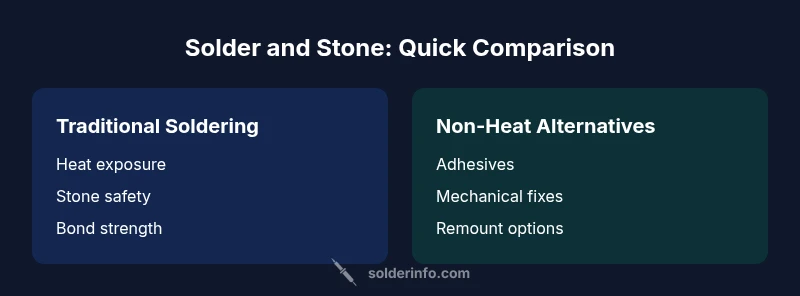
Solder and Stone: Jewelry Soldering Comparison Guide
Jewelry soldering with stones versus non-heat methods: an analytical comparison covering heat safety, gemstone compatibility, and practical guidance for SolderInfo readers.


Comparison: When soldering near a gemstone, the safest path is to weigh traditional heat-based methods against non-heat alternatives. This SolderInfo analysis outlines how stone type, setting style, and project purpose steer the choice. For most jewelers, the right approach balances bond strength with gem safety and repair practicality.
Context: Solder and Stone in Jewelry Making
Solder and stone interactions form a core challenge for jewelers and hobbyists alike. The basic idea of joining metal with solder becomes more complex when a gemstone is in proximity or embedded in the piece. From a safety standpoint, heat ranges must be carefully controlled to avoid gem cracking, color changes, or matrix damage. The SolderInfo team emphasizes that choosing an approach begins with understanding the stone's heat tolerance, the setting type, and the desired permanence of the bond. This section sets the stage for a structured comparison by outlining common scenarios where traditional soldering and stone settings meet. The goal is to help you decide quickly, yet safely, whether to proceed with heat-based techniques or pivot to gentler alternatives. As emphasized by SolderInfo in 2026 analyses, context is king when solder and stone compatibility is on the line.
How Heat Interacts with Gemstones
Gemstones respond to heat differently based on composition, inclusions, and surface treatments. For example, many transparent gemstones may tolerate brief heat if shielded and cooled rapidly, but organic gems or delicate colored stones can suffer irreversible changes. The interplay of flame temperature, exposure time, and the presence of flux determines outcomes. The most reliable approach is to test on a scrap piece and, when possible, to isolate the stone with a heat barrier or to relocate the gemstone before applying heat. The SolderInfo team notes that adopting a conservative heat profile reduces risk while preserving structural integrity. For hobbyists, investing in temperature-controlled tools or micro-torches can offer finer control and safer results, especially when stones sit close to solder joints.
Bezel vs. Solders: Setting Styles and Stress Points
Bezel settings often place the most heat near the stone, while flush settings minimize exposure by keeping the stone flush with the metal. Traditional soldering strengths are high when the joint has a well-cleaned surface and a compatible alloy, but the heat path can still travel through the metal toward the stone. Setting style also defines potential failure modes: a poorly supported stone may shift during heating, a brittle gemstone may crack, and a heat-affected zone can alter metal hardness around the joint. This section contrasts common settings to illuminate when heat-based methods are appropriate and when alternative, low-heat methods might be safer. The overall message from SolderInfo is to balance mechanical retention with gemstone safety and long-term durability.
Stone Sensitivity: Color, Clarity, and Thermal Shock
Stones vary in how they respond to temperature changes. Opals and pearls are particularly susceptible to heat and dehydration, while sapphires, rubies, and emeralds show greater resilience when handled with care. Thermal shock can occur if a stone experiences rapid temperature shifts, resulting in fractures or crazing. Understanding the stone’s refractive index and heat tolerance helps determine whether conventional soldering is prudent or whether a reduced-heat approach is preferable. Practical guidance includes using soak times, heat blocks, and protective barriers to manage heat flow and protect cohesive gem integrity. SolderInfo’s findings highlight customized strategies for each gemstone family to minimize risk while achieving a reliable bond.
Non-Heat Alternatives: Epoxy, Adhesives, and Mechanical Fixes
When heat poses excessive risk, non-heat alternatives can yield durable results with proper preparation. Epoxy resins and jewelry-grade adhesives provide strong bonds while avoiding thermal stress. Mechanical methods—such as press-fit settings, clamps, or secure bezels—offer protection against heat exposure and can simplify remounting or repairs. The trade-offs include bond longevity, bond aesthetics, and the need for curing time. This section helps you map project goals to the most appropriate non-heat approach, highlighting scenarios where adhesives or mechanical fixes outperform traditional soldering. According to ongoing SolderInfo analysis, the safest choice often depends on stone type and setting geometry, not just material strength.
Step-by-Step: Safe Soldering with Stones (Small Jewelry)
Preparing for a safe soldering job involves planning, protection, and precision. Start with cleaning and fluxing, then position the stone with micro-fixtures or a bead of bead-setting cement to minimize movement. Use a controlled heat source, keep the flame away from the stone, and employ a heat sink to draw away excess heat from the gem’s vicinity. Cool gradually and inspect the joint for fillet quality and stone stability. If the stone shows signs of distress, stop, reassess, and consider alternative methods. This practical guide emphasizes incremental steps, careful temperature control, and gem-safe practices—core principles highlighted by SolderInfo in 2026.
Troubleshooting: When a Stone Moves or Cracks
Movement during soldering is a common risk in tight settings. Solutions include re-fixturing with gentle pressure, using additional adhesive barriers during the solder, or opting for non-heat methods for a remount. Cracking stones require immediate assessment: check for thermal shock, hidden fractures, or surface-cleanliness issues around the joint. The recommended approach is to halt heating, assess the impact, and decide whether to reseat, replace, or abandon the heat approach for this piece. SolderInfo emphasizes documenting the process to refine future techniques and minimize damage.
Material and Tool Considerations: Flux, Solders, and Torches
Choosing the right flux, solder alloy, and heat source is pivotal near stones. Soft solders with appropriate alloy content can reduce peak temperatures, but not all alloys are gem-friendly. Flux quality matters for preventing oxidation and ensuring a clean joint path. Torch type matters: micro-torches with precise flame control reduce risk compared to large open flames. This section connects tool choices to outcomes, offering practical guidance on selecting equipment and materials that align with stone sensitivity and project goals. SolderInfo’s recommendations emphasize conservative heat, protective barriers, and careful material selection.
Practical Scenarios: Jewelry, Electronics, and Hobby Projects
While this guide focuses on jewelry, the underlying principles apply to hobby projects and light electronics where small gemstones are involved. For delicate rings or intricate chains, opt for non-heat methods when possible. In professional settings, where durability matters, blend protective strategies with controlled heat to ensure reliability without compromising gem integrity. The scenarios illustrate why a fixed decision is rarely optimal: context dictates whether heat-based bonds or gentler alternatives prevail. SolderInfo advocates a flexible mindset and a decision framework you can apply across genres.
Safety, Standards, and Maintenance: Pro Tips
Safe soldering near stones requires PPE, proper ventilation, and awareness of chemical exposure from fluxes and adhesives. Routine inspection after soldering helps catch weakness early, ensuring long-term performance. Standards in jewelry practice advocate for consistent preparation, appropriate material use, and documented maintenance. This block consolidates best practices and maintenance routines, reinforcing the core message: protect the gem, preserve metal integrity, and document outcomes for ongoing improvement. SolderInfo’s final guidance: approach every project with a plan that prioritizes gem safety, bond reliability, and repeatable results.
Comparison
| Feature | Traditional Soldering with Stone | Non-Heat Stone Setting Alternatives |
|---|---|---|
| Heat exposure | High risk to heat-sensitive stones | No heat exposure |
| Bond strength | Strong if properly controlled | Depends on adhesive/moisture; may be less permanent |
| Setup time | Longer prep and cooldown | Quicker setup with fixtures |
| Skill requirement | High—precision and practice needed | Moderate to low with proper fixtures |
| Repairability | Repair may require reheat | Easier to reposition or replace |
| Best for | Durable metal settings with heat-tolerant stones | Delicate stones or heat-sensitive gems |
Advantages
- Produces durable, jewelry-grade bonds when temperature is controlled
- Widely supported by tooling and technique resources
- Can be used for a wide range of metals and settings
- Allows precise alignment and strong mechanical joints
Cons
- Heat risk to gemstones and organic inclusions
- Requires significant skill and careful temperature management
- Not all stones tolerate heat equally; some gems require alternatives
- Longer setup and cooldown times can slow production
Traditional soldering is strong and durable when stones tolerate heat; non-heat methods offer safer alternatives for delicate gems
Choose heat-based soldering for durability with heat-tolerant stones. For delicate stones or highly heat-sensitive pieces, non-heat methods may deliver safer, repeatable results with fewer risks.
Quick Answers
Can you safely solder around all gemstones?
No. Some stones are highly heat-sensitive and can suffer damage from soldering heat. Identify the gem type and its tolerance before proceeding and consider non-heat methods when risk is high.
Not all gemstones tolerate heat well. Check the gem type, and if in doubt, use non-heat methods or shields to protect the stone.
Which gemstones are most at risk during soldering?
Opals, pearls, and some porous stones are commonly more sensitive to heat and flux exposure. Hardier stones like sapphires and rubies can handle brief heat with proper protection.
Opals and pearls are particularly sensitive to heat; use caution or non-heat methods for them.
Are there non-heat methods that work for stone setting in jewelry?
Yes. Epoxy, durable adhesives, and mechanical mounting strategies can secure stones without heat. They may require longer cure times and careful alignment but reduce heat risk.
Yes—adhesives or mechanical mounts can replace heat-based methods in many cases.
What tools help protect stones during soldering?
Heat shields, pick-and-place fixturing, and temperature-controlled torches help isolate the stone from heat. Using those tools reduces risk and improves accuracy.
Use heat shields and precise tools to keep stones safe during soldering.
How does stone setting influence the choice of soldering method?
If the setting places the gem near the joint or requires strong metal-to-metal bonds, heat-based methods may be necessary. For distal or fragile settings, consider non-heat options to preserve integrity.
The setting often decides whether heat is acceptable, or if safer non-heat methods are better.
Top Takeaways
- Assess gemstone heat tolerance before soldering
- Match setting style to gem safety and joint strength
- Prefer non-heat options for brittle or heat-sensitive stones
- Test on scraps and document results for consistency