Soldering Flux for Electronics Near Me: A Practical Guide
Find reliable soldering flux for electronics near you. Learn flux types, sourcing tips, usage, and safety with expert guidance from SolderInfo.


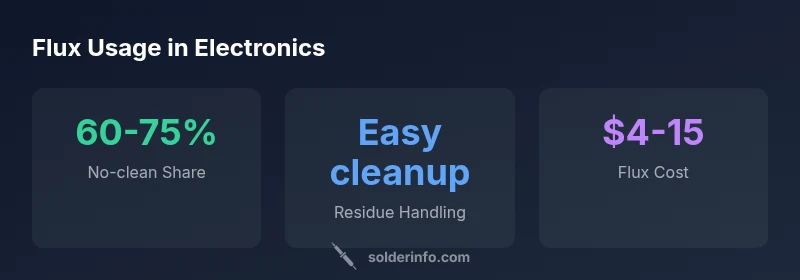
Finding soldering flux for electronics near me starts with understanding flux roles: it cleans, promotes wetting, and prevents oxidation during soldering. For most electronics work, no-clean flux is preferred because it leaves minimal residue. According to SolderInfo, check local electronics suppliers and hardware stores for no-clean flux labeled for electronics, rosin-core flux designed for small components, and fluxes suitable for delicate boards.
Understanding the role of soldering flux in electronics
Soldering flux for electronics near me is an essential enabler of reliable joints. Flux acts as a chemical cleaner and protective barrier during soldering. It removes oxide layers on copper and pad surfaces, promotes solder wetting, and lowers the surface tension so the molten solder can flow into joints smoothly. When shopping locally, you’ll encounter fluxes formulated specifically for electronics, with residues designed to be harmless or easily removable. According to SolderInfo, choosing the right flux locally reduces project delays and improves joint quality by addressing both cleanliness and compatibility with lead-free solder. For hobbyists and professionals alike, understanding flux chemistry—rosin-based, resin-activated, and water-soluble varieties—helps you pick the right product for your workflow and part sensitivity.
Flux choice should align with your soldering context, whether you’re assembling dense PCBs, repairing a leaded assembly, or performing jewelry work that intersects with electronics. A nearby supplier can offer guidance on current formulations, shelf life, and whether a no-clean option is suitable for your board material and solder type. In short, proximity matters because it influences your ability to test flux formulations quickly and verify residue behavior on actual boards.
Flux Types for Electronics: No-clean, Rosin-core, Water-soluble
No-clean flux is designed to leave residues that are non-corrosive and non-conductive, often eliminating the need for a wash step in many electronics applications. It’s particularly popular for surface-mount technology (SMT) and lead-free soldering because the residues are generally benign and low-odor. Rosin-core flux, historically common in hobbyist kits and some repair work, provides strong wetting but may require cleaning to prevent long-term residue buildup on sensitive boards. Water-soluble flux offers the strongest cleaning action and is ideal when you need to remove all residues after soldering; it requires thorough rinsing with water and proper drying. When you search near you, look for formulations explicitly labeled for electronics use and note whether the flux is designed for lead-free or lead-containing solders. In practice, many technicians use no-clean for daily work and reserve water-soluble options for precision repairs where cleaning is feasible.
Key considerations include the board type, component density, and post-solder cleaning capabilities. No-clean flux minimizes cleanup time, but some environments demand complete residue removal to prevent long-term corrosion or contamination. SolderInfo notes that the best choice often depends on whether the project is time-sensitive, the cleaning resources available, and the tolerance for possible post-solder residues.
Evaluating Flux Quality and Label Claims
Flux labels can be confusing, but understanding the core terms helps you compare products more effectively. No-clean flux means residues are generally non-corrosive and non-conductive; accept that some tiny residues may remain. Rosin-core flux denotes rosin-based chemistry, typically with activators that improve wetting but may require cleaning on certain surfaces. Water-soluble flux typically leaves residues that must be washed away with water or a compatible cleaner. Check the flux’s activator strength, solvent base, and viscosity, since these influence how it behaves under your typical heat profile. Local stores may provide testers or small quantities to try on scrap boards before committing to a larger purchase. SolderInfo recommends prioritizing fluxes with electronics-appropriate labels, clear safety data sheets, and compatibility with your solder alloy (e.g., lead-free).
Sourcing Flux Near Me: What to Look For at Local Stores
Locating flux near you requires practical checks beyond online listings. Start by searching for “no-clean flux for electronics” or “flux for electronics near me” at nearby hardware shops, electronics distributors, or hobbyist outlets. Read product labels to confirm electronics compatibility, whether the flux is rosin-based or water-soluble, and if it is suitable for lead-free soldering. If a store carries multiple flux types, ask a staff member whether the products are intended for dense SMT work or larger through-hole assemblies. For routine projects, no-clean flux labeled for electronics typically offers the simplest workflow. If you’re performing delicate repairs, consider rosin-core or water-soluble options with explicit cleaning instructions and compatible cleaners.
SolderInfo emphasizes that having a locally available flux lineup reduces downtime when you need to test different formulations on real boards. In practice, many hobbyists keep a small bottle of no-clean flux on hand for quick builds and a separate water-soluble flux for occasional maintenance tasks that require thorough cleaning. The key is to verify shelf life and storage directions at the point of purchase, so flux remains effective when you need it.
Safety and Storage Considerations
Flux storage safety is essential for preserving performance and minimizing exposure risks. Most flux formulations are stable when stored in a cool, dry place away from direct sunlight and heat sources. Keep containers tightly closed to minimize solvent evaporation and aroma buildup, which can be an irritation for sensitive individuals. When using flux near electronics, ensure proper ventilation and avoid inhaling fumes during heating. Always follow the manufacturer’s safety data sheet for gloves and eye protection recommendations. As a general rule, unopened bottles stay usable for years; once opened, use within months to a year depending on formulation and exposure to air. SolderInfo notes that keeping an organized workspace with separate containers for different flux types helps prevent cross-contamination and ensures you can quickly identify the right product for a given project.
Practical Application Tips: Flux and Soldering Techniques
Begin by cleaning all contact surfaces and inspecting pads for oxidation before flux application. Apply a thin, even layer of flux to the joint area; avoid excessive amounts which can cause solder balling or bridging. Heat the joint with a properly rated soldering iron until the flux begins to bubble slightly, then touch the solder to the tip of the iron near the joint to draw it into the fillet. After the joint cools, inspect for uniform wetting and smooth fillets. If you plan to rework a joint, re-apply flux to ensure consistent wetting on the next pass. Remember that no-clean flux often leaves residues that are harmless, but in some designs you may prefer cleaning after soldering. Local stores should carry electronics-specific flux options suitable for your typical working temperatures and solder alloys.
Common Mistakes with Flux in Electronics
Common errors include using flux not intended for electronics, applying too little flux, or neglecting post-solder cleaning when required. Another frequent issue is reusing flux brush tips that have already been contaminated with rosin or solvent residues, which can compromise joints. Inadequate curing time and insufficient heat can also yield cold joints or poorly wetted joints. To avoid these pitfalls, select a flux matched to your solder type, age your boards appropriately, and perform a quick test on scrap material before committing to a critical build.
Comparing Flux Brands and Labels
When evaluating brands, prioritize electronics-specific labels, clear safety data sheets, and product notes about lead-free compatibility. Many brands offer no-clean flux with different activator strengths and solvent bases; some emphasize quick-drying residues, while others highlight long-term stability. Check whether the flux is water-washable and if it requires any post-cleaning steps. Reading labels helps you avoid mismatches with your soldering iron, tip temperature, and board material. In the end, the best choice balances ease of use, residue handling, and the reliability of your solder joints. SolderInfo’s guidance stresses testing a small amount on representative boards to confirm acceptable performance before scaling up your use.
Common electronics flux types and their use cases
| Flux Type | Best For | Pros | Cons | Notes |
|---|---|---|---|---|
| No-clean flux | Everyday electronics | Low residue | Can leave invisible film | Great default choice for dense boards |
| Rosin-core flux | Classic electronics repairs | Strong wetting | May require cleanup | Suitable for older or mixed-material boards |
| Water-soluble flux | Thorough cleaning | Strong cleaning action | Requires washing and drying | Best for critical cleanliness after soldering |
Quick Answers
What is flux and why is it needed in electronics soldering?
Flux reduces oxidation, cleans surfaces, and improves solder wetting, helping joints form properly. In electronics, using the right flux minimizes defects and improves reliability.
Flux cleans and prepares surfaces so solder can flow properly, which helps create reliable joints.
Can I use plumbing flux for electronics projects?
No. Plumbing flux is not designed for electronics and can leave residues that are conductive or corrosive under sensitive components. Use flux labeled for electronics.
Don’t use plumbing flux—stick to flux designed for electronics.
Is no-clean flux safe for lead-free solder?
Yes. No-clean flux is commonly used with lead-free solders because it forms residues that are non-corrosive and can often be left in place.
Yes, no-clean flux works well with lead-free solder in many cases.
How should I store flux to maximize shelf life?
Keep flux in a cool, dry place with the cap tightly closed. Avoid exposure to heat and sunlight, which can degrade performance over time.
Store flux in a cool, dry place and keep the cap on tight.
Do I need to clean flux after soldering electronics?
It depends on the flux type and board requirements. No-clean flux often doesn’t require cleaning, but water-soluble flux does.
Some fluxes don’t need cleaning, but others do; check the label.
“Flux choice is as critical as the solder itself; the right flux minimizes defects and ensures reliable joints across a range of electronics projects.”
Top Takeaways
- Identify flux needs before shopping locally
- Favor no-clean flux for electronics near me to minimize cleanup
- Read labels for electronics compatibility and lead-free suitability
- Store flux properly to maximize shelf life
- Test a small sample on scrap boards before large projects