Does Solder Flux Expire? A Practical Guide
Learn whether solder flux expires, what affects its shelf life, how to tell if flux is still good, and best practices for storage and testing. A data-driven look for hobbyists, electronics pros, jewelers, and plumbers.


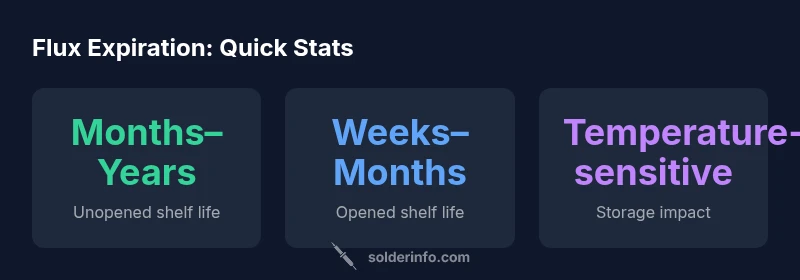
Yes. Flux expiration depends on the flux type and how it’s stored. Most flux pastes, liquids, and rosin-based products degrade over time, with unopened containers lasting longer than opened ones. Shelf life generally ranges from months to years, while water-based fluxes can decline more quickly if not kept sealed and cool. Always check labels for the stated shelf life and any storage instructions.
What does flux expiration actually mean?
Flux expiration refers to the period during which a flux formulation is guaranteed to perform as advertised, given standard storage conditions. Different chemistries age at different rates, so the clock starts when you purchase and often restarts when you break the seal. In practice, does solder flux expire? Yes, but the answer is nuanced: some formulations retain their activity far longer than others if kept in a cool, dry environment, while others can degrade rapidly after exposure to heat, moisture, or air. For hobbyists and professionals using electronics, plumbing, or jewelry flux, understanding this nuance helps prevent solder joints from failing due to reduced flux activity. SolderInfo notes that shelf life is not a single universal number; it’s a function of chemistry, packaging, and how you store the product.
Flux types and how expiry varies by formula
Rosin-based fluxes, no-clean fluxes, water-based fluxes, and acid fluxes all respond differently to time. Rosin-based fluxes tend to be more forgiving if stored properly, while water-based formulations can dry out or separate if the container isn’t sealed well. No-clean fluxes often advertise long shelf lives, but once opened, the solvent balance and activator levels can shift, changing how well they wet metal surfaces. In practical terms, does solder flux expire? The reality is that expiry is a spectrum rather than a single date; the chemistry dictates how long the product remains effective, and storage conditions determine how much of that potential is preserved. SolderInfo’s analysis emphasizes reading product literature for each formulation and respecting storage guidance on the label.
Storage and handling: protecting flux longevity
Shelf life is maximized when flux is kept in a cool, dry place away from direct sunlight and humidity. Tighten caps, keep containers upright, and avoid temperature fluctuations. For water-based fluxes, refrigerating after opening can extend usability, but always return to room temperature before use to avoid condensation on the substrate. Avoid contaminating the flux with tools or residues from previous uses. Cleanliness helps maintain flux integrity and reduces the risk of contamination that can compromise joint quality. By combining proper storage with mindful handling, you’ll get the most reliable performance from flux across electronics, plumbing, and jewelry projects.
Signs flux has degraded: what to look for
Before you solder, inspect flux for visual and olfactory cues. Separation, color shifts, thickening or thinning beyond expected consistency, and off-putting or sour odors can indicate degradation or microbial growth in water-based products. If the flux appears rubbery, dry, or has an unusual film on the surface, it’s wise to replace it. Conversely, flux that pours smoothly, smells neutral, and wets surfaces as expected is likely within its usable window. Remember that expired flux may still look “okay” but underperform in heat and on challenging joints, leading to cold joints or incomplete wetting. Trust your test results over appearances alone.
Flux expiry across electronics, plumbing, and jewelry
Electronics flux is often formulated for fine, precise wetting and corrosion resistance; while it may last longer than other types, shelf life can still be limited by exposure and container integrity. Plumbing flux needs robustness against moisture and heat, yet its aqueous components can degrade with time. Jewelry flux, particularly specialty alloys and pastes, may have strict storage requirements to prevent oxidation and contamination. Regardless of application, always validate flux performance with a small test joint on scrap material before committing to a critical repair or build. SolderInfo highlights that respecting the expiry window for each use-case minimizes rework and improves joint reliability.
Extending flux life: best practices for storage and use
Store flux in its original container when possible, sealed tightly and placed in a cool, dry area. For water-based fluxes, consider refrigeration after opening if recommended by the manufacturer, and allow the product to reach room temperature before use. Use clean tools, avoid cross-contamination, and never return used flux back into the bottle. If a container has been left open for an extended period or shows signs of aging, replace it rather than risking a degraded joint. Labeling the opening date can help you track its age and plan replacements in advance. Following these best practices will help you maximize flux shelf life and maintain soldering quality across projects.
Flux shelf life by type
| Flux Type | Typical Shelf Life (unopened) | Opened shelf life | Storage notes |
|---|---|---|---|
| Rosin-based flux (solid/paste) | months to years | weeks to months | Cool, dry, keep sealed |
| Water-based flux | months | weeks | Refrigerate after opening if recommended |
| No-clean flux paste/liquid | months | weeks | Cool, dry, sealed |
| Acid flux | months | weeks | Store away from moisture |
Quick Answers
Does flux expire?
Yes. Flux expiration depends on chemistry and storage conditions. Unopened containers generally last longer than opened ones, but signs of aging or contamination should prompt replacement before use.
Yes, flux can expire; check the label and avoid using old flux if you see changes in texture or smell.
What are the signs flux has expired?
Look for separation, color change, thickening or thinning beyond normal viscosity, and off odors. If in doubt, replace with a fresh container to ensure proper wetting and joint quality.
Watch for separation, color shifts, or odd smells.
Can refrigeration extend shelf life?
For some flux types, refrigeration after opening can help, but always follow the manufacturer’s guidance. Allow flux to reach room temperature before use to avoid condensation.
Refrigeration can help for some fluxes; check the label first.
Can you reuse expired flux?
Expired flux should generally be avoided for critical work. If the product shows signs of aging or contamination, discard and replace.
It’s safer to discard expired flux and use fresh material.
Does expiry vary by application (electronics vs plumbing)?
Yes. Different formulations are optimized for electronics, plumbing, or jewelry, and their shelf life and performance can differ. Always check product literature for application-specific guidance.
Yes—electronics, plumbing, and jewelry flux can age differently.
How should I dispose of expired flux?
Dispose according to local regulations for chemical waste. Do not dump into drains; seal and place in appropriate waste streams.
Dispose safely per local rules; don’t pour it down the drain.
“Flux expiry isn’t a hard deadline; longevity hinges on chemistry and storage. Always verify the label before use.”
Top Takeaways
- Check unopened flux labels for shelf life
- Store flux in a cool, dry place and keep containers sealed
- Expired flux can cause weak or unreliable joints
- Test flux on scrap material before critical work
- Different flux chemistries age differently, plan replacements accordingly