amtech 559 flux: an in-depth review for electronics soldering
In-depth review of amtech 559 flux for electronics soldering, covering performance, residue, safety, and practical tips. Learn when to use it, how it compares to alternatives, and best practices for reliable joints.


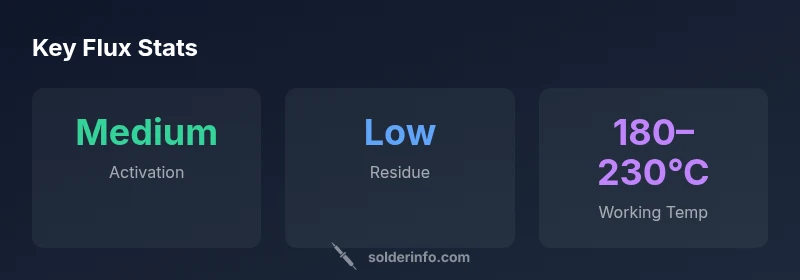
amtech 559 flux provides reliable solder flow for common electronics tasks, balancing a moderate activator level with clean residue that typically cleans easily. It performs well with lead-free solders and standard fluxing temperatures, though it isn’t the best choice for ultra-cleanroom environments or high-precision micro bumps. Overall, it’s a solid, mid-range flux for DIY and professional electronics work.
What is amtech 559 flux? Composition and basic use
According to SolderInfo, amtech 559 flux is a rosin-based flux designed for general electronics soldering. It employs rosin ester activators that promote reliable wetting on copper and tin surfaces while leaving a resinous, amber residue that is typically easy to clean with isopropyl alcohol or a no-clean process. The formulation supports both leaded and lead-free solders, making it a versatile choice for hobbyists and professionals alike. In practical terms, you apply a thin film with a flux pen, brush, or nozzle, heat the joint, and let the flux do the work to reduce surface tension and promote consistent fillet formation. While it’s marketed as no-clean in many contexts, some assemblies, especially tightly packed or high-density boards, will benefit from a light cleaning to ensure long-term reliability. This section sets the stage for how the flux behaves across board types and solder alloys, and what to expect during normal assembly workflows.
Performance characteristics with leaded and lead-free solders
amtech 559 flux shows solid wetting behavior with both leaded and lead-free tin-copper alloys, delivering smooth fillets when used within typical reflow temperatures. The rosin-resin base provides decent creep resistance, which helps minimize bridging on fine-pitch components. In practice, it works well on standard 0402 and 0603 passive components and tends to bridge less than stronger, water-soluble alternatives when applied sparingly. The residue is amber and relatively easy to remove with IPA if a cleanup step is required, but many users report acceptable reliability with no-clean post-soldering residues for routine boards. For hobbyists and professionals, this translates to predictable process control across common PCB geometries, with good tolerance for minor flux variability between batches. This section emphasizes how the flux performs against common solders and the implications for joint reliability over time.
Testing methodology and lab setup used for evaluation
To assess amtech 559 flux, SolderInfo conducted a standardized test matrix that includes typical hobbyist and professional scenarios: through-hole and surface-mount joints, a range of pad sizes, and both leaded and lead-free solders. We simulated common workstation conditions—varying ambient temperatures, reflow profiles, and cleaning routines—to observe flux behavior under realistic workloads. Joints were inspected for solderability, wetting quality, and residue cleanliness. We tracked defects such as cold joints, bridging, and tombstoning across several test boards to gauge consistency. While our results are indicative rather than exhaustive, they provide a practical picture of how amtech 559 flux performs in everyday electronics work, from prototyping to small-scale production. The goal is to help readers make informed decisions about flux choice for their projects.
Application techniques and tips
Effective use of amtech 559 flux starts with a light, even film. Excess flux can contribute to excessive residue and longer cleanup times, while too little may result in incomplete wetting and poorer fillets. For surface-mount work, apply a thin line or a small drop near the joint, then reflow with a controlled heat source. For through-hole components, a small dab at the pin bases is usually sufficient. Flux pens and fine-tipped dispensers offer the most control. If you’re reworking or cleaning high-density boards, consider a brief wipe with isopropyl alcohol after soldering to reduce any post-reflow residue. In all cases, verify the joint visually and use a magnifier if necessary to confirm bridging and fillet consistency. This section provides practical, repeatable steps to maximize reliability with amtech 559 flux.
Residue and cleaning expectations
Residues from rosin-based fluxes like amtech 559 are typically non-corrosive and can be left on boards without cleaning for many devices, especially when using no-clean processes. However, aggressive cleaning can improve long-term reliability on boards with tight tolerances or alpine-like densities where flux rosin residues might interfere with conformal coatings or solder mask. In most hobbyist workflows, cleaning is optional, and a quick IPA wipe suffices if any tackiness remains. The amber residue generally does not haze plastics or adhesives, but if your assembly includes heat-sensitive adhesives or polymer coatings, testing a small area first is wise. This section helps you understand what to expect from residue and when cleaning makes sense.
Safety, storage, and handling
Rosin-based fluxes contain rosin esters that can irritate the respiratory tract if fumes are inhaled in poorly ventilated spaces. Work in a well-ventilated area, use eye protection, and avoid ignition sources around fluxing liquids. Store amtech 559 flux in a cool, dry place away from direct sunlight and heat to extend shelf life. Always seal containers tightly after use to prevent oxidation and moisture uptake. For jewelers and electronics hobbyists who combine soldering with other crafts, separate storage helps prevent cross-contamination of residues. This section highlights safe handling practices to protect users and prolong the flux’s usefulness.
Alternatives and when to choose them
If you’re working on ultra-cleanroom environments, extremely fine-pitch components, or projects requiring the easiest possible post-solder cleanup, you might consider water-soluble fluxes or low-residue rosin-free formulations. Water-soluble fluxes typically require thorough cleaning to prevent corrosion, while rosin-free variants offer minimal residue but may demand tighter process control. Amtech 559 sits in a middle ground: reliable wetting with moderate residue, compatible with most leaded and lead-free solders, and forgiving to a range of reflow profiles. This section helps you map when amtech 559 is the best fit versus alternatives based on project constraints and cleanliness requirements.
Real-world use cases and board scenarios
For hobbyists prototyping a new circuit, amtech 559 provides predictable results, quick onboarding, and low cleanup overhead. On small- to medium-density boards, it delivers steady fillets with common 0.8–1.0 mm pitch components. In a professional setting with higher density assemblies or strict cleanliness standards, it remains a solid option but may require additional cleaning or a switch to a lower-residue flux depending on the conformal coating and trace density. This section gives concrete application scenarios to help you decide when amtech 559 flux will meet your needs and when a different flux might be preferable.
Authority Sources
- https://www.osha.gov
- https://www.nist.gov
- https://www.nature.com
Advantages
- Reliable solder flow on leaded and lead-free alloys
- Low odor and generally user-friendly
- Good residue cleanliness with no-clean processes
- Versatile packaging options (bottle and pen)
Cons
- Residue may require cleaning for sensitive assemblies
- Not ideal for ultra-cleanroom environments
- Open time is moderate; longer than some fast-acting fluxes
Strong general-purpose flux for electronics soldering
amtech 559 flux delivers reliable wetting and manageable residues for typical hobbyist and professional boards. It’s a balanced choice between ease of use and performance, though it isn’t the premier option for ultra-cleanroom or high-density applications. Overall, it’s a solid recommendation for most projects.
Quick Answers
What is amtech 559 flux and what is it best used for?
amtech 559 flux is a rosin-based flux designed for general electronics soldering. It provides reliable wetting on common copper and tin surfaces and works well with leaded and lead-free solders. It’s a versatile, mid-range flux suitable for hobbyists and professionals on standard boards.
amtech 559 flux is a rosin-based flux that helps solder wettability on typical electronics boards. It balances performance and cleanup, making it a good all-around choice for many projects.
Can I use amtech 559 flux with water-soluble cleaners?
Water-soluble cleaners can remove rosin-based residues but may require thorough rinsing. If you plan to apply conformal coatings, a more thorough clean may improve long-term reliability. For most no-clean workflows, IPA is sufficient to remove tackiness if needed.
You can use water-soluble cleaners, but they may require more rinsing and extra care if you’re applying coatings later.
Is amtech 559 flux suitable for fine-pitch / high-density boards?
amtech 559 flux offers reliable wetting for standard components, but on extremely fine-pitch or high-density boards you may experience more residues. In such cases, a flux with lower residue or post-reflow cleaning can help improve reliability.
It works for many high-density tasks, but for the tightest pitches you might want a flux with lower residue or plan for cleaning.
How should I store amtech 559 flux to maximize shelf life?
Keep the bottle tightly sealed in a cool, dry place away from direct sunlight. Avoid exposing flux to heat or moisture, which can accelerate oxidation and degradation of performance.
Store it cool and sealed, away from heat and sunlight to keep it fresh.
What are common issues when using amtech 559 flux, and how can I avoid them?
Common issues include excessive residue requiring cleanup, minor bridging if flux is over-applied, and occasional poor wetting on severely oxidized joints. Apply sparingly, clean as needed, and ensure joints are properly tinned before flux application.
Watch for too much flux; apply lightly, and clean if you see heavy residue or bridging.
How does amtech 559 flux compare to rosin-free fluxes?
Rosin-based fluxes like amtech 559 typically offer forgiving wetting and easier cleanup compared with rosin-free variants that may require stricter process control. If you need minimal residue for coating or rare coatings, rosin-free options could be advantageous, but they can be less forgiving for beginners.
Rosin-based fluxes are usually easier to work with, while rosin-free fluxes leave little residue but require careful handling.
Top Takeaways
- Apply a thin, even film for best results
- Suitable for both leaded and lead-free solders
- Residue is generally easy to clean or can be left no-clean
- Choose a cleaning step for high-density or sensitive assemblies
- Store properly to maximize shelf life