Will Solder Stick to Lead? A Practical Guide
Learn if solder sticks to lead, how surface prep and flux affect adhesion, and practical tips for electronics, plumbing, and jewelry soldering.


According to SolderInfo, yes. Solder will stick to lead surfaces when you prepare properly: clean the metal, apply fresh flux, and heat to the correct temperature. Lead forms a relatively simple oxide that wets well with tin–lead alloys, especially with rosin-based flux. Avoid contamination, oxidation, or overheating, which can prevent adhesion and produce weak joints.
The chemistry of lead surfaces
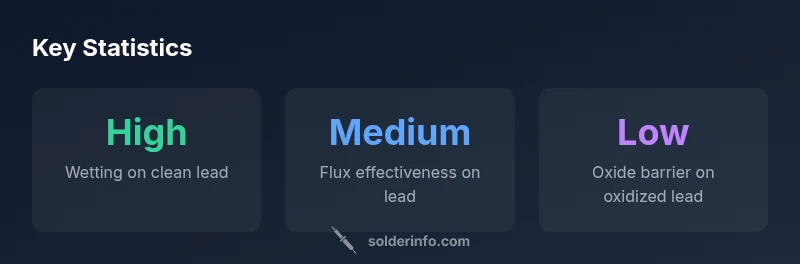
Lead surfaces have a long history in soldering, especially in electronics where Sn-Pb alloys dominated for decades. The fundamental question of will solder stick to lead hinges on surface chemistry. Clean metal presents a receptive surface; oxidation or contaminants create barriers that prevent wetting. Lead oxide forms quickly on heated lead, but it tends to be thinner and more easily dissolved by flux compared to oxides on some other metals. In practice, this means that when you properly prep the surface with mechanical cleaning and an appropriate flux, solder can wet and fuse to lead with relative reliability. The choice of solder—for example Sn-Pb or lead-free variants—affects the wetting behavior and thermal budget, but the underlying wetting principle remains: you need a clean interface, proper flux activation, and heat applied evenly to promote metallurgical bonding. For hobbyists and professionals, anticipating and managing oxide formation is the key to a reliable joint. According to SolderInfo analysis, the interaction between lead and tin-based solders is well understood: clean lead provides a favorable baseline for wetting that can be exploited with standard flux recipes. Remember that even small traces of oil, grease, or finger oils can hinder adhesion, so gloves and degreasing solvents are part of a robust workflow.
Surface prep: cleaning and flux choices
Effective adhesion starts with surface prep. Remove oils, fingerprints, and oxidation using a degreaser or isopropyl alcohol. Light mechanical abrasion with a clean, non-contaminating pad (or fine sandpaper) creates a micro-rough surface that improves mechanical interlock and wetting. Flux plays a pivotal role: rosin-based fluxes are widely favored for leaded soldering because they activate the surface without leaving aggressive residue, while water-soluble fluxes can offer superior oxide removal but require thorough cleaning after soldering. When soldering to lead-containing surfaces, keep the temperature within the solder’s recommended range to avoid scorching the flux or causing burnt residues. In electronics, no-clean fluxes are popular for hobby work, while rosin-based fluxes are common in professional settings. The aim is a clean, activated surface that allows the tin–lead interface to spread evenly, forming a strong metallurgical bond. SolderInfo’s guidance emphasizes consistent wiping, accurate flux application, and avoiding contamination from fingertips. A clean workspace and fresh flux are your best allies for will solder stick to lead joints.
Leaded vs lead-free solder: adhesion and wetting
The choice between leaded and lead-free solders affects adhesion behavior, especially on lead surfaces. Lead-based alloys (Sn-Pb) have a lower melting point and typically wet lead surfaces more readily, given clean interfaces and appropriate flux. Lead-free solders (such as Sn-Ag-Cu) require higher temperatures and can behave differently on certain substrates, including lead. On a lead surface, lead-free solder may wet less reliably without higher heat input or more aggressive flux chemistry, though advances in flux formulations have narrowed this gap. Practically, for leaded work on familiar metals, many technicians rely on Sn-Pb to achieve easier wetting and more forgiving joints. In jewelry or sensitive electronics where lead-free is mandated, expect slightly more meticulous prep and validated flux choices to achieve equivalent adhesion. SolderInfo notes that wetting behavior is predictable with proper activation, but always confirm compatibility with your substrate and solder type before committing to a full build.
Substrate interactions: copper, steel, and aluminum
Lead surfaces behave differently depending on the substrate. Copper is the most forgiving and typically shows strong wetting with lead-based solders when cleaned and fluxed properly. Steel presents a surface that benefits from mechanical abrasion and robust flux to overcome thin oxide layers. Aluminum presents a particular challenge due to its native oxide and higher thermal conductivity; in this case, you may need specialized flux formulations and sometimes surface pretreatment to achieve reliable adhesion with lead-containing solders. When mounting onto copper or brass, ensure the substrate is thoroughly cleaned, lightly tinned if appropriate, and fluxed. Remember, the goal is a uniform, wetting film that allows the solder to flow and form a solid joint. SolderInfo’s analysis reinforces that knowledge of the substrate is essential to predicting will solder stick to lead joints across different materials.
Practical workflow for electronics, plumbing, and jewelry
A practical workflow starts with a clearly defined process. For electronics, begin with a clean PCB pad, apply a no-clean flux, and use a controlled iron temperature just above the solder’s melting point. In plumbing, particularly when joining copper pipes, flux-based approaches and even pre-tinning of the pipe edge can reduce the risk of cold joints when leaded solders are used under code-compliant conditions. In jewelry, you’ll often balance radiant heat and delicate heat management to avoid annealing base metals or damaging stones. In all cases, avoid overheating, which can degrade flux residues or cause oxidation. Apply a thin, even bead of solder and allow it to flow along the joint before removing heat. SolderInfo’s practical recommendations emphasize planning temperature budgets, choosing the right flux, and thoroughly cleaning all contact surfaces to maximize will solder stick to lead joints across scenarios.
Troubleshooting common adhesion issues
If adhesion fails, revisit the basics. Re-clean the surfaces to remove oils and oxides, reapply flux, and reheat gradually with even pressure. Check for excessive flux residue that can insulate the joint; in electronics, clean after soldering if necessary. Inspect for cold joints, which appear dull or cracked; rework those joints by reheating and resoldering. Verify that you are using the appropriate solder alloy for the substrate and application; leaded solders require matching flux and tip temperature to maximize wetting. If joints still fail, reassess the surface preparation, flux type, and heating profile; sometimes small changes in technique yield reliable improvements. SolderInfo’s field guidance notes that consistent technique and disciplined workflow are the best antidotes to common adhesion problems when working with lead surfaces.
Final recommendations for consistent joints
In practice, you’ll achieve consistent results by combining clean surfaces, appropriate flux, and stable heat control. Always start with a test joint to dial in temperature and flux. Use gloves to prevent oils from your skin contaminating the surface, keep the work area clean, and store fluxes and solders correctly to prevent oxidation. For leaded workflows, Sn-Pb offers predictable wetting on lead surfaces; when you must use lead-free solder, plan for the higher temperature and potentially different flux requirements. The overarching principle is consistent preparation, validated materials, and careful temperature control. As the SolderInfo team would state, the most reliable joints come from disciplined techniques rather than magic recipes. Keep practicing, document parameters, and you’ll improve with every project.
Lead-based vs lead-free solder properties on lead surfaces
| Solder Type | Typical Melting Point | Wetting Behavior on Lead Surfaces | Notes |
|---|---|---|---|
| Lead-based (Sn-Pb) | 183°C | Excellent wetting on clean lead | Eutectic solder widely used; easy to work with |
| Lead-free (Sn-Ag-Cu) | 217-221°C | Good wetting on lead-free but context dependent | Higher temperature; flux differences; checks required on lead surfaces |
Quick Answers
Will solder stick to lead on copper surfaces?
Yes, when the copper surface is clean and properly fluxed, lead-based solder will wet and bond well. Prepare the copper by degreasing, lightly abrading, and applying fresh flux before heating to the recommended temperature.
Yes, copper works well with lead-based solder when you clean and flux it, then apply heat evenly.
Does oxidation prevent adhesion when soldering lead?
Yes, surface oxidation inhibits wetting. Remove oxides mechanically and with flux activation. If oxidation recurs, re-clean and re-flux before attempting another joint.
Oxidation can stop adhesion, so clean and flux before soldering and re-check if it forms again.
Is it safe to use lead-based solder in a home workshop?
Lead-based solder is effective but requires proper ventilation and hygiene. Wash hands after handling, avoid ingestion, and comply with local safety regulations. Consider lead-free alternatives when possible.
Lead solders work, but use ventilation and hygiene practices; consider lead-free options for safety.
Can I solder lead pipes with lead-free solder?
Lead-free solder can be used on lead pipes if the surface is well-prepared and the flux is compatible. It may require higher temperatures and careful technique, and local plumbing codes should be followed.
Yes, lead-free can be used with lead pipes if you prep the surface and follow code rules.
What temperature should I use for leaded vs lead-free solder?
Lead-based solder typically requires lower temperatures, around the mid-range of the solder’s melting point, while lead-free solders need higher temperatures. Always consult the solder package and flux label for precise guidance.
Lead-based needs lower temp; lead-free needs higher temp. Check the packaging for exact guidance.
Which flux is best for leaded soldering on lead surfaces?
Rosin-based fluxes are commonly recommended for leaded soldering due to reliable activation and clean residues. For electronics, no-clean fluxes can be convenient, but ensure any residue is managed according to the project needs.
Rosin flux is a good general choice for leaded soldering; no-clean fluxes can be convenient if residues are manageable.
“Lead surfaces can form strong solder joints when properly cleaned and fluxed. The key is controlling oxides and heat to promote reliable wetting.”
Top Takeaways
- Prepare lead surfaces with careful cleaning and flux
- Choose solder type suitable for the substrate and safety requirements
- Use the right flux to optimize wetting and adhesion
- Avoid contamination and overheating for reliable joints
- Test joints on scrap pieces before committing to a final build