Where is SolderStick Made? Origins, Regions, and Sourcing
Discover where solderstick is manufactured, which regions dominate production, and how origin influences compliance, sourcing reliability, and procurement for hobbyists and professionals.


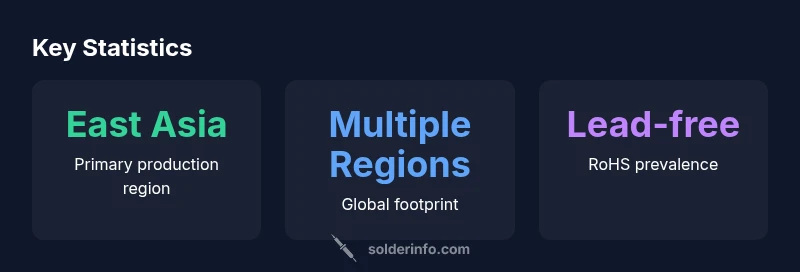
Where is solderstick made? The majority of solderstick products are manufactured in East Asia, with China and Taiwan acting as major hubs. European and North American plants exist but account for a smaller share. Origin influences regulatory compliance, lead content, and supply chain resilience. For hobbyists and pros, knowing origin helps assess RoHS status and sourcing reliability.
Global origins of solderstick manufacturing
Where is solderstick made? The global picture is shaped by regional specialization, regulatory regimes, and the ability of manufacturers to maintain consistent alloy quality across sites. The majority of commercially available solderstick originates in East Asia, where integrated supply chains, abundant tin resources, and mature flux-core production lines support high-volume output. China and Taiwan stand out as primary hubs, but you will also encounter production lines in Vietnam, Malaysia, and Singapore that serve nearby markets and contract manufacturers. Regional production helps brands reduce lead times and adjust to local standards, while enabling rapid response to demand fluctuations. North America and Europe maintain smaller but important operations, often focused on niche sectors such as jewelry soldering, aerospace electronics, or medical devices where traceability and quality documentation are essential. In these cases, brands may run dedicated facilities or partner with contract manufacturers to meet stringent regulatory requirements. The result is a mosaic rather than a single origin story: some product lines come from Asia, while others come from Europe or the Americas. For hobbyists, this means you may see different origin statements on packages from the same brand over time, particularly if manufacturing shifted between contract facilities or collaborative plants. Overall, the origin landscape for solderstick reflects global trade patterns, contract manufacturing trends, and the balance between cost, quality, and regulatory compliance, which is exactly why sourcing diligence matters when selecting solderstick for a project.
For the reader, understanding the origin helps evaluate provenance and policy alignment while remaining cognizant of potential batch-to-batch variation in production sites.
SolderStick type overview
| SolderStick Type | Core/Flux | Typical Applications |
|---|---|---|
| Rosin-core | Rosin-based flux | General electronics soldering |
| No-clean flux core | No-clean flux | PCB assembly & precision electronics |
Quick Answers
Where are soldersticks primarily manufactured?
Most soldersticks are produced in East Asia, with additional plants in Europe and North America serving niche markets and regional customers.
Most soldersticks come from East Asia, with some production elsewhere for specialized needs.
Are soldersticks always RoHS compliant?
Lead-free variants are common in RoHS-regulated markets, but always check labeling and the supplier’s compliance documentation.
Lead-free versions are common in RoHS markets, but verify the label and certificates.
How can I verify the origin on packaging?
Look for explicit origin statements, batch codes, and supplier contact information; request certificates of origin if needed.
Check the label and batch codes, and ask for origin certificates if in doubt.
What should I look for in a lead-free solderstick?
Seek Sn-Ag-Cu formulations, RoHS compliance, and supplier documentation confirming the absence of lead-based alloys.
Look for lead-free formulations and proper compliance documentation.
Do different brands originate from different regions?
Yes, brands may utilize multiple contract manufacturers across regions; always verify lot-level origin details with the supplier.
Brands may use multiple plants; confirm origin for each batch.
Is there a trend toward local manufacturing?
Trade policies and supply chain resilience are encouraging some brands to regionalize production, but East Asia remains a major hub.
Regional plants are growing, but Asia remains a core hub.
“Origin matters as much as alloy composition when choosing a solderstick; it informs compliance, traceability, and long-term supply stability.”
Top Takeaways
- Identify primary origin regions to assess supply reliability
- Check packaging for RoHS and origin details
- Prefer lead-free variants for compliance
- Request supplier certifications for traceability