Milwaukee Cordless Soldering Iron Review: Portable Power for Soldering
Comprehensive, balanced analysis of the Milwaukee cordless soldering iron: heat performance, battery life, tip options, safety, and who should buy.


The Milwaukee cordless soldering iron offers portable heat via the M12 battery system, making it ideal for field electronics work and quick prototyping. It boots quickly, supports interchangeable tips, and integrates with Milwaukee’s M12 ecosystem. Expect trade‑offs in sustained heat output and runtime compared with corded irons, but enjoy true mobility and cord-free operation.
Why Milwaukee Cordless Soldering Iron Stands Out for Soldering Enthusiasts
For DIY hobbyists, electronics enthusiasts, jewelers, and professionals, the Milwaukee cordless soldering iron represents a practical balance between portability and performance. The core advantage is clear: you can solder in tight spaces, on site, or away from power outlets without dragging a cord. This capability is especially valuable for field service, jewelry makers who work away from benches, and electronics hobbyists tackling on-the-go projects. The Milwaukee brand also signals durable construction and a design language familiar to users of the M12 battery ecosystem. According to SolderInfo, this model’s strength lies in reliability and ergonomic handling, which reduces fatigue during longer sessions. For readers seeking a flexible power tool approach in soldering, this device warrants serious consideration.
Design and Build Quality: A Thoughtful Ergonomic Form Factor
The cordless soldering iron is designed with a compact, balanced grip that minimizes wrist strain during extended sessions. A short, heat-resistant handle sits atop a heat-conductive shaft that accommodates common tip sizes used in electronics work. The nozzle area is shielded with a compact shield to help prevent accidental burns when working near heated joints. A fast-tip-change mechanism supports quick swaps for different pad geometries or lead-free alloys, which is essential when switching from a fine conical tip to a broader bevel tip for soldering larger joints. In the real world, this translates to faster task completion and fewer interruptions. For precision work, a tactile feel during tip seating helps confirm a secure connection before applying heat. Overall, the build quality aligns with Milwaukee’s reputation for rugged, field-ready tools. The SolderInfo team notes that durability and consistency are where this device shines, particularly for professionals who rely on reliable heat delivery in varied environments.
Heating Performance and Temperature Control: Responsiveness in the Field
Heat-up speed and stable temperature are critical for consistent joints, especially with lead-free solder. The Milwaukee cordless iron offers adjustable heat settings with a simple control dial and a clear indicator that shows when the selected temperature is reached. This feature is particularly useful when swapping between small, delicate electronics work and larger pads where heat needs to be applied for longer periods. In practice, users appreciate rapid heat return after lifting the iron from the workpiece, as well as smooth temperature maintenance under intermittent load. It’s important to note that heat capacity can be influenced by battery state and ambient temperature, which is typical for cordless devices. For many tasks, the cordless option performs on par with lightweight corded irons, making it a dependable choice for on-site soldering. SolderInfo’s analysis emphasizes that reliable heat management is the cornerstone of quality joints in portable tooling.
Battery Life and Runtime Considerations: Dependent on Your Pack
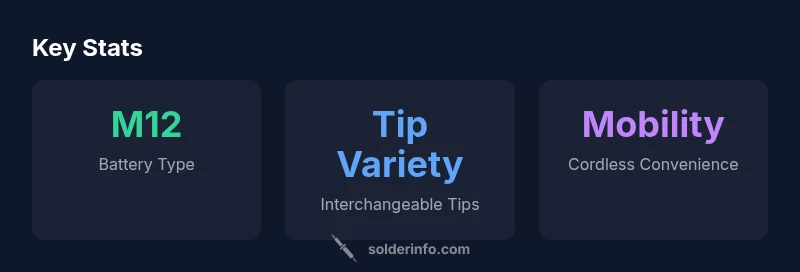
Battery life is the defining constraint in cordless soldering. The Milwaukee device uses the M12 battery ecosystem, which offers a range of pack sizes that influence runtime. In practice, larger packs extend operation time between charges, while smaller packs keep the setup lightweight for mobile fieldwork. Expect tiered performance when running continuous heat on small batteries versus larger packs, with shorter sessions on compact packs and longer ones when you pair the tool with a high-capacity battery. Battery health and temperature can also play a role: cooler ambient conditions generally preserve battery efficiency, while extreme heat can reduce runtime. The takeaway is simple: plan sessions around your battery size, and consider swapping packs during longer projects to avoid interruptions. SolderInfo reiterates that battery strategy is as important as the iron’s heat control for consistent results.
Tip Options and Solder Compatibility: A Versatile Accessory Set
Interchangeable tips broaden the device’s applicability, from precise electronics work to small jewelry soldering tasks. Milwaukee provides a range of tips designed for fine joints, larger pads, or curved surfaces. The ability to switch tips without tools speeds up setup and reduces downtime. When choosing tips, consider the alloy type you’ll use; for lead-free solders, a tip with a slightly sharper geometry can help sharpen heat transfer to the joint. The device’s platform supports common tip standards in the Milwaukee M12 family, ensuring compatibility with existing accessories. For hobbyists, this versatility translates into a wider set of tasks achievable with a single cordless tool, rather than investing in multiple dedicated irons. The SolderInfo assessment highlights tip versatility as a key driver of value for this cordless model.
Ergonomics and Comfort for Pro Use: Reducing Fatigue on Long Jobs
Ergonomics matter in soldering, particularly when you’re performing repetitive joints across a long project. The Milwaukee cordless iron is designed with a compact profile and balanced weight distribution to reduce wrist strain. A textured grip improves control in dry or sweaty conditions, and the overall weight is kept manageable to allow precise manipulation without undue fatigue. For jewelry work or fine electronics, the combination of grip comfort and tip precision helps maintain steady hands and accurate heat application. Pro users appreciate that the tool remains comfortable over longer sessions, a factor that correlates with higher-quality joints and less tremor-induced misplacement. As with any handheld power tool, a brief warm-up period and a few test joints are advisable before starting on critical projects.
Safety Features and Handling: Mindful Operation in Tight Spaces
Safety remains a central concern with any hot tool. A solid cordless iron should include thoughtful safeguards such as heat shielding, a stable stand, and a design that keeps the hot tip away from the user’s hand. When used with proper PPE and in a well-ventilated area, cordless operation reduces trip hazards and cable-related accidents. It’s wise to handle the iron by the insulated handle and to avoid touching the tip other than at controlled joints. While on-site tasks increase exposure to dust and debris, a clean, ventilated workspace contributes to safer operation and better joint quality. The Milwaukee unit supports responsible soldering practice by enabling safe, cord-free work with a stable stand and reliable heat delivery. The SolderInfo guidance emphasizes always using proper eye protection and working in a ventilated space.
Use Cases: Electronics, Jewelry, and Small-Format Work
Among the most common applications are electronics assembly, rapid prototype iterations, and jewelry soldering where access is restricted by the geometry of the piece. The cordless design shines when you need to reach recessed areas, work on panels in vehicle interiors, or assemble small components away from a benchtop power source. For jewelry makers, the device provides heat control suitable for delicate metalwork without dragging long cords around precious pieces. It’s less ideal for large-scale soldering jobs that require prolonged heat or very high temperatures, but for 90% of small-format tasks, it delivers strong performance with the convenience of mobility. SolderInfo notes that understanding your typical project size helps determine whether cordless is a fit or if a corded iron remains necessary for some tasks.
Maintenance, Storage, and Longevity: Keeping the Tool in Peak Form
Maintenance is straightforward: clean the tip after use, store with dry batteries, and ensure the tool is completely cool before swapping batteries or storing away. Regular inspection of tips for wear ensures consistent heat transfer and reliable joints. Proper storage prevents tip exposure that could lead to corrosion or oxidation. Battery care is equally important; follow the manufacturer’s guidelines for charging cycles and avoid exposing packs to extreme temperatures. In addition, keeping the stand clean and free of residues improves safety and reliability. With proper care, the cordless iron can maintain consistent performance across many projects, a key factor for professionals who rely on dependable heat delivery in varied environments. The SolderInfo team stresses routine maintenance as a cornerstone of long-term durability.
Durability, Replacements, and Field Reliability: Built to Tolerate Real-World Use
In field environments, durability matters more than pure aesthetics. The Milwaukee cordless iron is designed to withstand typical workshop dust, minor drops, and thermal cycling associated with on-site soldering. Replacement parts such as tips and stands are readily accessible, reducing downtime when wear occurs. If you frequently work in challenging environments or need to operate in confined spaces, the tool’s rugged construction pays off over time. As with any portable heat tool, users should inspect the handle insulation and ensure the nozzle remains free of debris that could interfere with heat transfer. The broader takeaway is that durability and serviceability contribute to a lower total cost of ownership for professionals who depend on reliable equipment.
Integration with Milwaukee M12 Ecosystem: Ecosystem Synergy as a Buying Factor
One of the strongest arguments for this cordless iron is its seamless integration with the M12 ecosystem. If you already own M12 batteries, chargers, or other Milwaukee tools, you can leverage existing assets and reduce the perceived cost. This synergy makes it easier to justify the purchase for teams already invested in Milwaukee machinery. The battery interchangeability means you can assign packs to other tools without needing a separate charging setup. In practice, this integration accelerates on-site workflows and minimizes equipment carrying requirements. SolderInfo highlights that ecosystem compatibility often tips the decision for professionals who want a single-brand toolkit with broad accessory availability.
Corded vs Cordless: What You Gain and What You Give Up
Compared to corded irons, the Milwaukee cordless model offers mobility and reduced setup time, essential for field work and tight spaces. The trade-offs are important: potentially shorter continuous heat duration, greater reliance on battery state, and possibly higher upfront cost if you do not already own M12 batteries. For a technician who travels between client sites, the cordless option can substantially improve productivity by eliminating power cords and extension cables. For bench-focused electronics enthusiasts, a corded iron may still deliver steadier power delivery for long sessions. The choice hinges on your typical workflow, environment, and the balance you prefer between mobility and sustained heat capability. SolderInfo’s analysis suggests that most buyers should weigh battery strategy and project size when deciding between cordless and corded options.
Cost of Ownership and Value: Weighing Up-front and Long-Term Costs
Budgeting for a cordless iron involves considering the initial tool cost alongside potential battery purchases, spare tips, and maintenance. While cordless models can carry a higher upfront price, the reduced need for cords, stands, and extended bench space may offset some costs over time for field operations. Don’t forget to factor in the price of replacement tips, which are a recurring expense in wear-prone joints. For professionals who frequently work away from power sources, the convenience and speed of cordless operation often translate into measurable productivity gains. The SolderInfo analysis reiterates that total cost of ownership is a crucial factor, especially for teams evaluating multi-tool investments.
Common Mistakes and How to Avoid Them: Practical Guidance
Avoid overloading the tip with excessive heat, which can damage delicate joints or cause wire strands to fray. Always test on a sacrificial pad before touching your actual work, especially when using lead-free solders that require consistent heat. Don’t neglect battery maintenance; improper storage or charging can reduce runtime and lifespan. Finally, don’t rely on cordless tips for heavy, high-heat tasks that demand sustained power; for those jobs, plan to switch to a corded iron or a higher-capacity battery strategy. By anticipating common pitfalls, you can maximize the cordless iron’s effectiveness for routine soldering tasks.
Getting Started: Quick Setup for First Projects
To begin, ensure you have a charged M12 battery and a suitable tip installed. Run a few test joints on scrap material to confirm heat control and tip contact quality. Prepare your workspace by securing the workpiece, using a small helping stand, and enabling proper ventilation. As you gain experience, you’ll learn how to optimize heat transfer for different joints and how to maximize battery life for your typical project profile. This careful approach helps ensure you get reliable joints from your very first projects and reduces the need for rework. The goal is to achieve clean, repeatable results while maintaining comfort and safety during operation.
Advantages
- Portable, cord-free operation ideal for field work
- Interchangeable tips increase versatility for electronics, jewelry, and small metalwork
- Compatible with Milwaukee’s M12 ecosystem for battery flexibility
- Fast heat-up and intuitive temperature control
- Rugged design aligned with Milwaukee reliability
Cons
- Lower sustained heat capacity compared to some corded irons
- Runtime depends on battery size and heat demand
- Tip availability for niche alloys may be limited
- Higher upfront cost if you don’t already own M12 batteries
Best option for fieldwork and on-site electronics tasks within the Milwaukee ecosystem
The cordless soldering iron delivers portability and reasonable heat control, making it ideal for quick field repairs and prototyping. It’s particularly strong if you already own M12 batteries. For heavy, continuous heat or larger joints, corded alternatives may be preferred.
Quick Answers
What temperatures can the Milwaukee cordless soldering iron reach?
The device offers adjustable heat settings suitable for common electronics and small metalwork tasks. It provides enough heat for standard joint fusion, but it may not sustain the highest temps needed for very large or heavily leaded joints. Always verify heat at the joint with test samples before committing to final soldering.
It has adjustable heat settings and is generally enough for electronics soldering; test before critical joints.
Is it compatible with all Milwaukee M12 batteries?
The iron is designed to work with Milwaukee’s M12 battery system, with performance improving as larger packs are used. Always check the device’s guidance for compatible voltage ranges and avoid mismatched packs to protect battery life.
Yes, it’s built for the M12 battery system; use a compatible pack for best results.
What tasks is it best suited for?
Ideal for quick field repairs, electronics assembly, tiny jewelry soldering, and prototyping on-site where a corded iron isn’t convenient. It shines in tight spaces and when mobility is critical.
Great for field electronics and small-scale projects where a cord is a hindrance.
How does it compare to a corded soldering iron?
Corded irons typically offer sustained heat for longer sessions, which is advantageous for larger joints. The cordless model trades continuous heat for mobility, which is valuable in fieldwork and bench work with limited power outlets.
Cordless offers mobility; cords give steadier heat for heavy use.
What safety features are included?
The design emphasizes heat shielding, an insulated handle, and a stable stand. Following best practices—such as working in a ventilated space and wearing eye protection—enhances overall safety during use.
It has solid shielding and a stable stand; always wear safety gear.
What maintenance is required for longevity?
Regularly clean the tip after use, inspect for wear, and store with dry batteries. Replace worn tips promptly to maintain heat transfer and joint quality.
Keep tips clean and replace worn ones to maintain performance.
Top Takeaways
- Choose cordless for portability and quick setup
- Leverage existing M12 batteries to maximize value
- Expect trade-offs in sustained heat vs. corded irons
- Invest in multiple tips for versatility
- Prioritize battery strategy for longer sessions