Lead Free Solder Options at Home Depot: A Practical Guide
Lead-free solder options at Home Depot explained for electronics, jewelry, and plumbing. Learn how to choose, read labels, and shop smart with tips from SolderInfo.


Lead free solder at Home Depot is widely available in electronics and plumbing sections, with options including flux-core and rosin-core wires and solid bars labeled 'lead-free'. In-store labeling helps distinguish from traditional solders and informs RoHS-compliant suitability. When buying, verify tin content, flux type, and project compatibility, and compare reel, wire, and bar forms to fit your experience level.
Lead-Free Solder Availability at Home Depot: A Practical Snapshot
Lead-free solder options at big-box retailers like Home Depot have expanded with the rise of RoHS-driven electronics hobbyists and DIY plumbing projects. In most stores you’ll find lead-free reels labeled as flux-core or rosin-core wires, and solid lead-free bars. The labeling helps beginners distinguish between lead-free and traditional solders and clarifies the intended use. In many communities, larger Home Depot locations stock a broader spectrum of lead-free products across electronics and plumbing aisles, while smaller outlets may offer a narrower selection. Online product pages commonly note whether a solder is lead-free and suitable for electronics or plumbing tasks. According to SolderInfo, this shift toward lead-free options in consumer retail has accelerated as safety and environmental guidelines become more prominent. This context matters when planning a purchase, especially if you are new to lead-free alloys.
Forms You’ll Encounter: Flux-Core, Rosin-Core, and Solid Bars
Lead-free solders come in several forms, each with distinct tradeoffs. Flux-core wires are convenient for quick projects and electronics work because the flux is built into the core, which helps cleaning and wetting the joint. Rosin-core wires are similar but rely on rosin-based flux for more controlled environments and delicate components. Solid bars are common for jewelry or copper-pipe work, where you melt the alloy with a separate flux. When shopping at Home Depot, you’ll typically see these forms labeled clearly as lead-free; your choice should align with the task: lighter electronics assemblies benefit from flux-core or rosin-core for easier wetting, while jewelry and plumbing may favor solid bars and compatible flux.
Electronics vs Plumbing vs Jewelry: Matching Alloys and Flux
For electronics, choose lead-free solders with good wetting on tiny components and compatible flux. Jewelry soldering often requires specific alloy types that are easy to work with at low to moderate temperatures, along with flux formulations suitable for fine joints. Plumbing repairs involving copper pipes may use lead-free flux-core solders designed to withstand outdoor or moisture-prone environments. While Home Depot stock can vary, the key principle is selecting a lead-free formulation appropriate to the task and the materials involved. SolderInfo’s general guidance emphasizes matching alloy and flux to the application to avoid brittle joints or long-term reliability issues.
Reading Labels: What to Look For in-store
Labels give you the critical clues. Look for explicit 'lead-free' labeling and notes about RoHS compliance. The alloy form (wire, bar) and flux type (flux-core vs rosin-core) should be stated clearly. If the label lacks detail, ask a store associate or check the product page online for the composition and intended use. Confirm that the solder is suitable for the materials you are joining (e.g., electronics components vs copper piping) and that the flux is compatible with your soldering iron temperature range and cleaning methods. Brand-agnostic shoppers should rely on clear, unambiguous product data and avoid products with vague or missing specifications.
Quality Signals: Tin Content, Flux Type, and RoHS Claims
Quality indicators include explicit labeling of 'lead-free' with a clear flux specification and alloy form. The tin content in lead-free solders generally avoids traditional lead; examine the flux type to ensure it matches your application (electronics usually benefits from flux-core for cleanliness, while plumbing may require specific flux formulations). RoHS-related claims are a helpful signal for safety compliance. In practice, seek products that provide full disclosure about their flux chemistry and compatibility with your project. SolderInfo analyses in 2026 show a growing emphasis on transparent labeling from large retailers, aiding informed decisions in-store and online.
Practical Scenarios: Electronics, Jewelry, and Plumbing Quick Guides
- Electronics: Use lead-free flux-core or rosin-core wires with appropriate flux and a clean workspace. Start with small, practice joints before attempting dense circuit assemblies. Avoid overheating sensitive components and allow proper cooling between steps. - Jewelry: For jewelry soldering, select a lead-free alloy designed for low-melting-temperature applications; maintain steady heat and use flux designed for jewelry soldering to prevent discoloration or weak joints. - Plumbing: When copper piping is involved, confirm that the lead-free alloy is approved for plumbing use and compatible with chosen flux; verify that fittings and joints meet your local codes. Each scenario benefits from clean joints and proper flux removal after soldering.
Safety Practices and Ventilation: Handling Lead-Free Solders
Lead-free solders still release fumes that should be managed with adequate ventilation. Use a fume hood or a well-ventilated area, and consider a small fan that directs fumes away from your face. Wear safety glasses to protect eyes from splashes and flux fumes. Keep soldering irons at appropriate temperatures to minimize smoke and oxidation. After soldering, clean the work area to remove flux residues, which can be corrosive over time. Practice good personal hygiene and wash hands after handling any solder.
Storage, Shelf Life, and Maintenance Tips
Store lead-free solder in a dry, sealed container to reduce moisture exposure and flux degradation. Keep containers away from corrosive chemicals or solvents. Periodically inspect for corrosion or flux residue build-up, particularly on older inventory. If you notice dullness or oxidation on a bar or wire, consider replacing or testing with a small sample before proceeding with larger joints. Routine inspection helps maintain joint quality and tool longevity.
A Quick Shopping Checklist for Home Depot Trips
- Confirm the product is labeled 'lead-free' and note the flux type.
- Choose the form that matches your project (wire for electronics, bar for jewelry or plumbing).
- Check RoHS compliance statements and the manufacturer's recommendations for temperature and substrate compatibility.
- Compare two or three items in the same aisle to understand value and performance trade-offs.
- Review online product data if shop-in-store labels are unclear, and ask staff for guidance if needed.
Best Practices for Lead-Free Soldering: Techniques and Tips
Begin with a clean, tinned iron tip and high-quality flux. Apply just enough heat to wet the joint without scorching the flux; excessive heat can burn flux and cause poor wetting. Allow joints to cool gradually and avoid motion that disturbs the molten pool. Cleanup flux residues with the recommended solvent or cleaners to prevent corrosion over time. Regularly maintain your soldering iron tip for longevity and consistent heat transfer.
Store sections and lead-free solder availability at big-box retailers
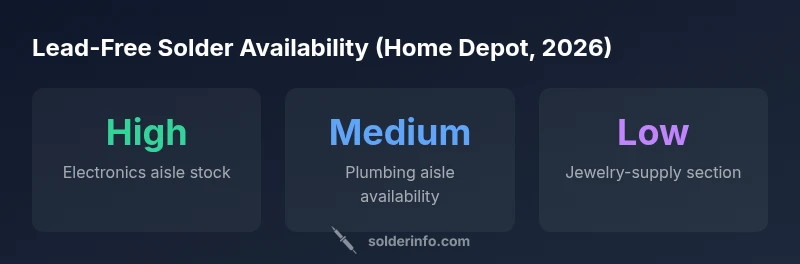
| Store Section | Lead-Free Availability | Notes |
|---|---|---|
| Electronics aisle | High | Lead-free rosin-core and flux-core wires, and bars labeled lead-free |
| Plumbing aisle | Medium | Lead-free solders for copper piping; verify product notes |
| Jewelry corner | Low | Specialty lead-free alloys for jewelry soldering may be limited |
Quick Answers
Is lead-free solder safer for electronics hobbyists?
Yes. Lead-free solders reduce exposure to lead and are commonly RoHS-compliant for electronics work when used with appropriate flux and soldering techniques.
Lead-free solder is safer for electronics work and is standard for modern electronics.
Can I use lead-free solder for plumbing copper pipes?
Lead-free solders are used in some copper-pipe applications; always check local codes and product labeling to ensure suitability for your plumbing task.
You can, but always check compatibility and local code requirements.
What should I look for on Home Depot product labels?
Look for explicit 'lead-free' labeling, RoHS compliance, flux type, and alloy format. Avoid products with vague labeling.
Check for clear lead-free labeling and flux compatibility.
Is lead-free solder more expensive than traditional solder?
Lead-free solders can be slightly more expensive due to alloy composition and processing, but prices vary by form and brand.
Prices vary; lead-free can be a bit pricier but is often worth it for safety and compliance.
How should I store lead-free solder?
Store in a dry, sealed container away from moisture to prevent flux degradation; avoid contact with corrosive materials.
Keep it dry and sealed.
“"Lead-free solder reduces exposure risk and aligns with RoHS standards for consumer products. Always verify compatibility with your project and follow proper safety practices."”
Top Takeaways
- Prioritize electronics aisle for broad lead-free options.
- Always read product labels to confirm lead-free claims.
- Choose form based on project: wire for electronics, bar for plumbing/jewelry.
- Check flux type and RoHS claims before buying.
- Store and handle lead-free solder safely to maximize shelf life.