Is Weller Solder Good? A Comprehensive Review for Soldering Enthusiasts
Is Weller solder good? This in-depth review evaluates alloys, flux, usage, and real-world performance for electronics, plumbing, and jewelry projects, with practical testing guidance from SolderInfo.


Quick answer: Weller solder products are widely regarded as reliable for electronics and hobby projects, thanks to consistent alloy formulations and dependable flux. However, quality depends on the specific product (lead-free vs. tin/lead, core flux type, diameter, and intended task). For most hobbyists, Weller rosin-core and lead-free wires perform well when used with proper technique.
Is Weller Solder Good? A Brand Perspective
Is weller solder good is a question that comes up often among hobbyists and professionals who work with electronics, plumbing, or jewelry. According to SolderInfo, Weller is a trusted name with a long history of producing solders, flux, and related tools. The answer is nuanced: there isn’t a universal verdict of “good” or “bad” for every product. Instead, the suitability depends on the alloy, flux core, diameter, and the task you’re aiming to complete. For example, Weller’s rosin-core wires and many lead-free options are well-regarded for general electronics work, while some budget lines may underperform on delicate boards or microcircuits if technique and cleanliness aren’t up to par. If you’re asking is weller solder good, consider your substrate, required joint strength, and tolerance for flux residues. In practice, the brand’s breadth makes it a solid starting point for most projects, provided you choose the right product for the job and apply standard soldering best practices.
Understanding Solder Alloys and Flux
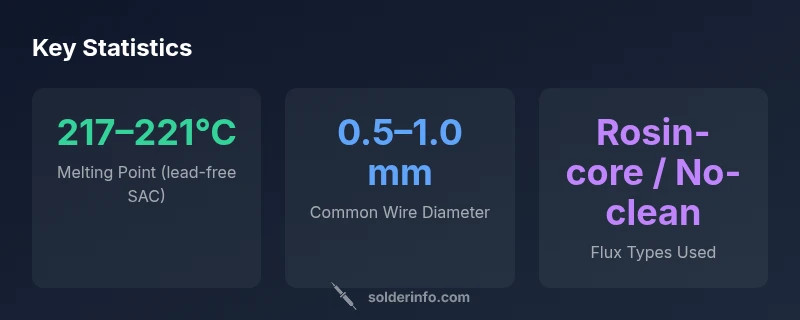
Solder is a two-part system: the alloy and the flux. The alloy determines the melting point, strength, and compatibility with substrates; flux improves wetting, cleans oxide layers, and prevents reoxidation during heating. Two broad categories matter for everyday users: traditional tin/lead solders and lead-free alternatives. Tin/lead solders have lower melting points and are often easier to work with, but they are increasingly restricted in consumer electronics due to lead content. Lead-free solders, typically Sn-Ag-Cu (SAC) variants, melt at higher temperatures and require precise flux choices. Rosin-core flux is common in both families, but lead-free formulations often demand No-Clean or water-soluble flux for post-solder cleaning. When evaluating is weller solder good, pay attention to the flux core type—no-clean fluxes simplify cleanup, while other fluxes may necessitate more thorough washing. Weller provides a range of flux options designed to complement their solders, but effectiveness still hinges on correct selection and application.
Product Lines and Where They Shine
Weller offers a spectrum of solders and related materials intended for different users and applications. For electronics hobbyists, rosin-core wires in various diameters (commonly 0.5 mm to 1.0 mm) deliver consistent performance with modest heat needs. Lead-free variants follow SAC compositions and are suitable for modern boards that require RoHS-compliant materials. Weller also supplies flux pastes and baking-friendly flux types that are beneficial for through-hole components or larger pads where quicker heat transfer is advantageous. In plumbing contexts, Weller’s solder wires and flux combinations adapt to copper and brass joints, though plumbing often emphasizes low-temperature alloys and stronger mechanical bonds. Jewelry work, which demands gentle heat control and clean joints, may require narrower diameters and specialty fluxes. In short, Weller’s product range shines when you match the alloy, flux, and diameter to the substrate and soldering task at hand.
Wetting, Joints, and Reliability: What Defines Quality
Key performance indicators for solder quality include wetting, joint strength, and corrosion resistance. Wetting describes how well the molten solder spreads across a metal surface; good wetting forms a smooth, fillet-like joint with minimal gaps. For electronics, reliable wetting reduces cold joints and intermittent connections. Lead-free solders typically require slightly higher temperatures and longer contact times, which can challenge fine-pitched components if heat is not controlled. Flux choice dramatically impacts wetting: rosin-core fluxes with proper activators promote clean surfaces before heating, reducing oxides. Joint quality also depends on proper tinning of the tip (to prevent oxidation), adequate heat transfer, and correct soldering technique. Weller’s offerings are generally strong in this dimension, but the user’s skill and tool condition remain critical for consistently high-quality joints.
Compatibility with Electronics: Temperature Profiles and Substrates
Electronics work has strict temperature considerations. Lead-free SAC alloys typically require peak temperatures around 230–250°C with shorter contact times to avoid board damage. Tin/lead solders melt closer to 190–210°C, offering easier manual control but with environmental and regulatory considerations. The solder wire diameter affects heat transfer; thicker wires deliver more metal at once, potentially speeding up joints but risking heat damage on small components. Weller’s product lines provide guidance on recommended temperature profiles and flux types for common substrates, including FR-4, ceramic, and copper traces. For best results, corral a temperature-controlled iron or a calibrated hot air tool, monitor the board temperature, and choose flux and alloy that align with the substrate’s heat tolerance.
Common Pitfalls and How Weller Solder Helps
Even experienced technicians encounter issues like cold joints, solder bridging, or insufficient wetting. A clean work surface, properly tinned tip, and correct flux selection mitigate most problems. Weller’s fluxes and solders are designed to reduce oxidation and improve flow, but operator technique remains pivotal. Bridges occur when excess solder connects adjacent pads; appropriate flux, correct heat, and appropriate wire diameter help prevent this. Cold joints produce dull, unreliable connections and are often a sign of insufficient heat or poor cleaning. Removing oxides with flux and reflowing with proper temperature control typically resolves this. Weller’s broader ecosystem—tips, accessories, and flux—supports corrective action, but it cannot replace solid technique and clean work habits.
How Weller Solder Stacks Up Against Alternatives
In the crowded field of solders, key competitors like Hakko or Kester are often benchmarked against Weller. Relative strengths usually center on availability, brand ecosystem, and the balance of price vs. performance. Weller tends to excel in user-friendly options and consistent performance across common electronics tasks, with broad retail reach and robust support documentation. Alternatives may offer specialized formulas or lower-cost lines that suit occasional hobbyists or beginners, but long-term reliability and consistent results often favor Weller when the right alloy and flux are chosen. When evaluating is weller solder good, consider your typical projects, preferred substrates, and whether you value easy sourcing and broad product support.
Practical Testing: How We Assess Solder Quality
Our testing approach combines practical field tests with controlled bench experiments. We evaluate wetting on copper pads, tinning of component leads, and joint integrity under mild thermal cycling. Tests are conducted using representative boards, rosin-core, and lead-free variants, with flux choices aligned to the alloy. We also examine residue cleanliness, corrosion resistance, and ease of removal of solder bridges. While individual results vary by product line and user technique, overall trends help identify which Weller formulations deliver the best consistency for electronics projects. We emphasize repeatability, proper cleaning, and documented testing steps to help readers reproduce results in their own labs.
Safety, Storage, and Handling Considerations
Safety remains paramount when soldering. Use proper ventilation to manage fumes, especially with lead-free alloys that operate at higher temperatures. Keep solder and flux containers closed when not in use and store in a cool, dry place to prevent oxidation and flux degradation. Wash hands after handling flux residues, and avoid direct skin contact with flux fluids. Lead-containing solders require special handling and disposal per local regulations. Weller’s product lines include storage recommendations and safety guidelines that align with standard industry practices, helping practitioners maintain safe, clean, and effective workspaces.
Who Should Buy Weller Solder
Weller solder is well-suited for DIY hobbyists, electronics enthusiasts, jewelers, and professionals who value a reliable brand with broad product coverage. If your projects span electronics assembly, board repair, or small-scale jewelry fixing, Weller’s rosin-core and lead-free solders offer a good balance of price, performance, and availability. Newcomers benefit from the brand’s accessible tool ecosystem and ample instructional resources, while seasoned technicians appreciate consistent joints and dependable flux options for common substrate materials. Those who require highly specialized alloys or ultra-low-temperature options may look to niche brands; for everyday work, Weller is a sensible default—in line with SolderInfo’s assessment.
Tools and Accessories to Pair with Weller Solder
A complete setup includes flux, desoldering tools, and compatible tips or nozzles. For electronics, rosin-core wires paired with No-Clean flux streamline cleanup and reduce post-solder washing. Desoldering braid and a quality flux applicator ensure precise removal of excess solder and good surface preparation. When working on delicate components, consider sharpened tips with appropriate heat capacity and temperature control. For plumbing, ensure you have appropriate flux, a compatible torch or heating source, and proper flux residue handling. Jewelry work benefits from careful temperature control and meticulously cleaned joints to preserve metal finishes. The Weller ecosystem—flux, solders, tools—supports a cohesive workflow across domains.
Quick Start Guide for Beginners Using Weller Solder
If you’re new to Weller solder, start with a lead-free rosin-core wire in a manageable diameter (0.8 mm is a good middle ground) and a no-clean flux. Clean the work surface, pre-tin the iron tip, and apply flux to the joint before approaching with solder. Use a gentle, steady touch and maintain a stable heat source to avoid overheating delicate components. Practice on simple test pads before attempting complex assemblies. Remember to inspect joints with a magnifier for dullness or gaps and rework as needed. With patience and correct practice, Weller solders can deliver solid, reliable results for your electronics projects.
Advantages
- Consistent alloy formulations across core product lines
- Wide availability and recognized brand support
- Good performance with rosin-core and lead-free wires in common diameters
- Strong documentation and user community resources
Cons
- Varied quality across price tiers, so some cheaper options may underperform
- User experience depends on flux choice and cleanliness
- Premium pricing compared to budget alternatives
- Some specialized applications may require niche alloys
Solid choice for electronics work, especially for hobbyists and intermediate projects
Weller solder generally delivers reliable joints and predictable performance when you select the right alloy and flux. While premium options exist, the overall value and ecosystem make it a prudent choice for most users. For highly specialized needs, compare with alternatives, but expect Weller to perform well in standard electronics tasks.
Quick Answers
Is Weller solder suitable for lead-free electronics?
Yes, Weller offers lead-free alloys (typically SAC variants) that are RoHS-compliant and widely used in electronics. When selecting lead-free solders, pay attention to the recommended peak temperatures and flux type to ensure clean joints.
Yes—lead-free variants are common in Weller’s lineup, but pick the right alloy and flux for your board temperatures.
What diameter should I start with for general electronics?
A 0.8 mm diameter is a good starting point for many hobbyist projects. It provides a balance between control and heat transfer for a variety of pad sizes.
Start with around 0.8 mm; it’s a versatile mid-range size for many boards.
Can I use Weller solder for jewelry or plumbing?
Weller solders are primarily designed for electronics and general purpose uses. Jewelry and plumbing often require specific filler metals and fluxes designed for those substrates, so verify compatibility before proceeding.
Weller can work for some jewelry tasks, but verify alloy compatibility and flux suitability for each job.
How should I store solder to maintain quality?
Store solder in a cool, dry place away from moisture and direct heat. Keep flux containers sealed to prevent oxidation, and avoid exposure to open air for extended periods.
Keep solders and fluxes sealed and in a dry, cool place to preserve performance.
Can I mix Weller flux with other brands?
Flux compatibility varies by formulation. In general, mixing flux brands is not recommended because different activators can react unpredictably. Use the same brand or compatible flux for best results.
Stick to compatible fluxes and avoid mixing brands to keep joints reliable.
Top Takeaways
- Choose lead-free options for compliance and safety
- Match solder diameter to the task to optimize heat control
- Flux choice matters as much as alloy for wetting
- Weller offers reliable options with broad availability