Is It OK to Solder AC Wires? A Practical Safety Guide
Is it OK to solder AC wires? Learn safety guidelines, safer alternatives, and how to work with mains wiring. This guide from SolderInfo covers de-energizing circuits, proper connectors, and insulation testing for DIY and pros.


Is it OK to solder AC wires? Generally no while the circuit is energized. Always de-energize and isolate the wiring, verify there’s no voltage, and use approved methods for in-line splices. If mains wiring must be joined, prefer manufactured connectors or crimp ferrule splices followed by proper insulation. Soldering mains should be avoided by hobbyists.
Why Soldering AC Wires is Risky
AC mains wires carry lethal voltage and can arc if mishandled. Soldering directly to exposed conductors can heat insulation, deform jackets, and create a short or fire risk. High temperatures from soldering can damage PVC insulation, degrade sheathing, and push copper particles into the air. Even with gloves, working close to live circuits exposes you to electric shock, burns, and flash hazards. For DIYers, the safest approach is to de-energize the system, isolate the wires, test for zero voltage, and choose approved connection methods. According to SolderInfo, proper mains wiring practice emphasizes using rated components and avoiding live work whenever possible. The SolderInfo team emphasizes that mains work should follow local electrical codes and safety guidelines to reduce risks.
When Soldering Might Be Considered (and How to Do It Safely)
There are few legitimate reasons to solder AC wires in a home setting; typically, you should avoid it. If you must connect conductors in a controlled and de-energized environment, ensure power is completely off and locked out, and use an insulation-compatible soldering method only on non-insulation portions. Even when powered down, heat can travel through insulation and damage surrounding materials, so mains soldering is generally discouraged. If a repair absolutely requires stripping and rejoining conductors in a controlled enclosure, consider non-solder methods first and treat any solder as a last resort after ensuring the circuit is isolated. The best practice is to rely on rated connectors that maintain insulation integrity and mechanical strength.
Safer Alternatives for Mains Wiring
The safest approach for AC wiring is to avoid soldering. Use crimp connectors or insulated butt splices that are rated for the conductor size and voltage. Terminal blocks or lever-nut connectors provide secure, code-compliant joints without exposing bare copper. If you need to seal a joint, use heat-shrink tubing with an appropriate adhesive lining or electrical tape rated for mains insulation. Whenever possible, replace damaged wire sections rather than attempting a splice. By prioritizing approved connectors and proper insulation, you reduce the risk of shock, arc faults, and fire hazards.
Safety Fundamentals for Mains Work
Mains work demands rigorous safety practices. Always power off the circuit, and lockout-tagout any access to the control. Use non-contact voltage testers and a multimeter to confirm zero voltage before touching conductors. Wear PPE such as safety glasses and insulated gloves, keep the workspace dry, and ensure good lighting. Maintain a tidy workspace and keep flammable materials away from the area. These fundamentals help prevent electric shock, burns, and accidental shorts when dealing with AC wiring.
Tools and Materials for Safe Mains Work
Essential tools include a non-contact voltage tester, a multimeter, insulated crimping tools, and appropriately rated insulated connectors. Have heat-shrink tubing, electrical tape, and wire strippers on hand to ensure a neat, insulated finish. If soldering is ever considered for non-mains control wiring, use lead-free flux-core solder and a temperature-controlled iron with proper ventilation, but do not solder live mains. Always select tools and materials that are rated for the voltage and ambient temperature of the installation.
Step-By-Step: Safe Mains Practice (Overview)
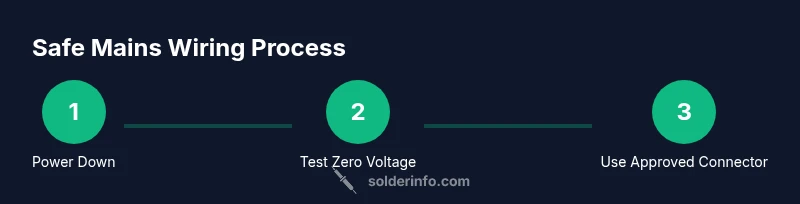
This section provides a high-level view of safe approaches. The steps focus on planning, using approved connectors, and securing insulation. Remember: soldering AC mains is generally discouraged; the following steps emphasize verification, proper connector use, and post-assembly testing to ensure safety and reliability.
Testing, Verification, and Documentation
After completing any splice or replacement on mains wiring, verify continuity with a multimeter and confirm there is no voltage present with a non-contact tester. Inspect insulation for nicks, cracks, or overheating signs. Document the work, including the wire gauge, connector type, and any replacement sections. If anything seems off, discontinue work and consult a licensed electrician.
Common Mistakes and How to Avoid Them
Common mistakes include soldering live circuits, using undersized connectors for mains currents, and neglecting insulation after a splice. Avoid overheating plastic insulation, which can emit fumes or deform jackets. Never rely on solder alone to secure a joint in high-current mains; always use rated connectors and proper insulation.
What to Do If Insulation Is Damaged
If the insulation is compromised, do not attempt a quick fix with solder. Replace the damaged section or whole run, and re-seat the joints with rated connectors. Damaged insulation increases the risk of short circuits and electric shock. When in doubt, replace the assembly or seek professional help.
Tools & Materials
- non-contact voltage tester(Used to verify that circuits are de-energized before touching conductors)
- multimeter(Verify continuity and absence of voltage after work)
- insulated crimping tool(For secure, code-compliant splices)
- insulated connectors (sleeves, butt connectors, or lever-nut blocks)(Rated for the conductor size and mains voltage)
- heat-shrink tubing (mains-rated)(Provide insulation and strain relief)
- electrical tape (mains-rated)(Extra insulation and strain relief)
- wire stripper(Prepare conductors cleanly without nicking copper)
- safety glasses(Protect eyes from debris or arcing)
- insulated gloves(Reduce risk of shock when handling conductors)
- gloves-insulated pair(Optional for extra protection)
- soldering iron (for non-mains control work only)(Not recommended for mains wiring; only for low-voltage control circuits)
- lead-free flux-core solder (for non-mains use)(Only for non-live circuits and proper ventilation)
- dry, flame-retardant mat or work surface(Keep the area clean and safe)
Steps
Estimated time: Estimated total time: 20-30 minutes
- 1
Power down and lockout
Shut off power at the main disconnect and lock the switch if possible. Ensure all downstream devices are isolated from power to avoid accidental re-energization.
Tip: Double-check that the breaker is off and labeled; never rely on the switch alone. - 2
Verify zero voltage
Use a non-contact tester and a multimeter to confirm no voltage on the conductors before touching them.
Tip: Test in two points on each conductor to be sure there is no residual charge. - 3
Plan the splice
Choose a connector suited to the conductor size and mains rating. Ensure the joint will be accessible for inspection and future maintenance.
Tip: Avoid projects inside tight enclosures where heat could accumulate. - 4
Prepare the conductors
Trim damaged insulation, strip an appropriate length, and twist conductors as required for the chosen connector.
Tip: Use de-burring to prevent nicking copper; keep copper clean and dry. - 5
Make the connection with approved method
Insert conductors into the rated connector or terminal block; crimp or screw down firmly according to manufacturer specs. Do not solder mains conductors unless in a clearly non-live, controlled context.
Tip: Follow torque specs to avoid loosening or overheating. - 6
Insulate and secure
Seal the joint with heat-shrink tubing or electrical tape; secure the wiring so it cannot move and rub against sharp edges.
Tip: Leave a small clearance for heat to escape; avoid over-tight bundling.
Quick Answers
Is it legal to solder AC mains wires at home?
Regulations vary by location; many codes require licensed electricians for mains work. Always check local codes and obtain any necessary permits before attempting electrical work on AC mains.
Local rules vary; check your codes and possibly consult a licensed electrician before working on mains wiring.
Can I solder live AC wires?
No. Do not solder live mains. Always de-energize, verify zero voltage, and use approved connections for any mains work.
Never solder live mains; always switch off and verify zero voltage.
What safer alternatives exist for mains connections?
Use rated crimp connectors, terminal blocks, or lever-nut systems with proper insulation. These methods provide secure connections without exposing conductors.
Use rated connectors like crimp or terminal blocks instead of solder for mains.
What if insulation is damaged on a mains wire?
Do not splice damaged insulation. Replace the affected wire section or assembly and test after replacement. If unsure, seek professional help.
If insulation is damaged, replace the wire rather than attempting a fix.
Which tools are essential for mains safety testing?
Have a non-contact voltage tester, a multimeter, and proper PPE. These tools help ensure your work is performed safely and reliably.
Non-contact tester and multimeter are essential for safety checks.
Is flux-core solder suitable for mains work?
Flux-core solder is generally not recommended for mains wiring. It is better suited for non-live circuits; always prioritize insulation and rated connectors.
Flux-core solder is usually not suitable for mains wiring.
Watch Video
Top Takeaways
- Always de-energize mains before any work.
- Use rated, insulated connectors—not direct solder for mains.
- Test for absence of voltage and inspect insulation after work.
- When in doubt, consult a licensed electrician.