Can You Solder Tin? A Complete How-To Guide
A comprehensive, educational guide on tin soldering, covering safety, tools, flux, alloys, and a step-by-step process for electronics, plumbing, and jewelry projects.


Yes. You can solder tin by heating the joint with a temperature-controlled iron, then applying the correct tin alloy with flux. Clean surfaces first, tin the tip, and avoid overheating to prevent burns and damage. Choose lead-free or tin–lead solder based on your project and safety requirements. This quick overview helps you decide if you can solder tin in your setup.
Can You Solder Tin: Context and Basics
Soldering tin is a common technique across electronics, plumbing, and jewelry making. The question, can you solder tin, is answered with a clear yes when you use the right alloy and flux and keep surfaces clean. Tin soldering typically uses lead free SnAgCu alloys for electronics and standard tin lead for certain plumbing tasks, but mixing alloys is not advised. Understanding the basics helps hobbyists and professionals choose the right approach for each project.
Safety and Ventilation for Tin Soldering
Soldering tin releases fumes that can irritate eyes and lungs, especially when lead containing solders are used. Always work in a well ventilated area or use a fume extractor. Wear safety glasses, keep a fire extinguisher nearby, and avoid loose clothing near the hot iron. Keep children and pets away from the workspace. The safety mindset in SolderInfo guidance emphasizes proactive ventilation and PPE as core habits, not afterthoughts.
Tools and Materials You Need
Before you start, assemble essential tools and materials. A temperature controlled soldering iron, fine tip, and adjustable heat are critical for precise joints. Choose tin solder in lead-free or SnPb form depending on your project and local rules. Flux (rosin core or flux pen) is essential for wetting surfaces, while solder wick and a desoldering pump help fix mistakes. Keep isopropyl alcohol, lint-free wipes, safety glasses, and a small damp sponge for tip maintenance within reach.
Surface Preparation and Tinning the Joint
Surface preparation is the foundation of a reliable joint. Clean copper or plated surfaces with isopropyl alcohol to remove oil and fingerprints. Lightly abrade the area to create a fresh metal surface, then apply flux to promote wetting. Tin the tip of the iron by melting a small amount of solder onto it, creating a smooth, evenly heated surface ready to transfer solder to the joint.
Flux and Its Role in Tin Soldering
Flux is the unsung hero of the soldering process. It removes oxidation, protects the metal from new oxidation during heating, and improves wetting so solder flows smoothly into the joint. Use rosin core flux for electronics and lead-free solders, or water-soluble flux for copper plumbing work. Apply a thin, even coat to both surfaces before heating, but avoid pooling flux in tiny spaces where it can trap air.
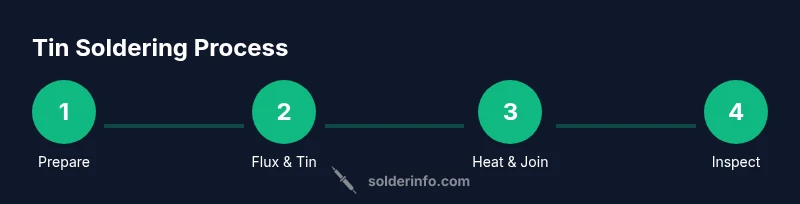
The Soldering Process: How to Apply Heat and Solder
Begin by heating the joint with the iron, then touch the solder to the joint—not the iron tip. Let the solder flow in a smooth fillet and remove the heat promptly to avoid overheating. Maintain a steady angle and a clean tip for consistent results. If joints appear dull or pitted, reapply flux and reheat with a small amount of solder to rebuild the joint.
Troubleshooting Common Tin Soldering Issues
Common problems include cold joints, dull or grainy surfaces, and solder bridges. Cold joints form when the joint cools before the solder fully wets the surface; fix by reheating and adding more solder with proper flux. Bridges happen when too much solder migrates between pads; correct with a wick to remove excess. Oxidation can ruin wetting—keep surfaces clean and fluxed, and use a properly tinned iron.
Lead-Free vs Tin-Lead Options for Tin Soldering
Lead-free solders require higher temperatures and can be more brittle if overheated, but they are the safer choice for many consumer electronics and plumbing tasks. Tin–lead solders solder more readily but pose lead exposure concerns; follow local guidelines and disposal rules. For jewelry or hobby projects, choose based on alloy properties, melting point, and safety considerations.
Finishing, Inspection, and Cleanup
After cooling, inspect each joint for a smooth, shiny fillet and no gaps. Wipe away flux residues with isopropyl alcohol and a lint-free cloth, then store tools in a dry, organized manner. Regular tip maintenance with a damp sponge keeps heat transfer efficient and prolongs tool life. Consistent practice improves results over time.
Real-World Scenarios: Electronics, Plumbing, Jewelry
Electronics benefit from clean, small joints on PCBs using lead-free solder for safety. Plumbing connections to copper require more flux and higher heat to solder thick-walled tubing. Jewelry projects often use small, delicate joints on precious metals with silver or gold solder; precision and cleanliness are paramount to preserve appearance. Each scenario demands the appropriate alloy, flux, and technique for a reliable bond.
Tools & Materials
- Soldering iron (adjustable temperature, fine tip)(Set to 300-370°C depending on alloy; use a fine tip (0.5-1.0 mm) for small joints)
- Solder (lead-free SnAgCu or SnPb alloy)(Lead-free for safety; SnPb is common for certain plumbing tasks)
- Flux (rosin-core or flux pen)(Choose flux compatible with your solder and metals; apply a thin layer)
- Solder wick (braid) or desoldering pump(For removing excess solder and correcting mistakes)
- Desoldering tools (optional)(Helpful for complex boards or dense layouts)
- Isopropyl alcohol (solve or wipe)(Use 70-90% IPA for cleaning residues)
- Lint-free wipes(Avoid fibers that leave residues)
- Safety gear (glasses, ventilation)(Ventilation or fume extractor is highly recommended)
- Wire cutters and needle-nose pliers(Precise handling of small parts)
Steps
Estimated time: Estimated total time: 25-40 minutes
- 1
Prepare workspace and safety setup
Clear the area, connect the iron, and ensure proper ventilation. Put on safety glasses and keep a fire extinguisher nearby. This first step reduces risk and creates a stable environment for precise work.
Tip: Test the iron and ensure it reaches a stable, controllable temperature before touching any components. - 2
Choose alloy and set temperature
Select lead-free or SnPb solder based on your project and adjust the iron to the recommended range. Higher temperatures improve wetting for lead-free solders but can damage heat-sensitive parts.
Tip: Avoid overheating; lead-free solder needs careful control to prevent damage to delicate parts. - 3
Clean and prep surfaces
Wipe surfaces with isopropyl alcohol, then lightly abrade if needed to remove oxides. Clean surfaces promote better solder flow and stronger joints.
Tip: Only use a light touch when abrading to avoid removing protective finishes. - 4
Apply flux to the joint
Apply a thin, even layer of flux to the surfaces to be joined. Flux reduces oxidation and aids solder flow for a stronger bond.
Tip: Keep flux from pooling in tight corners to avoid messy joints. - 5
Tin the iron tip
Melt a small amount of solder on the tip to improve heat transfer. Wipe away excess solder before starting the joint.
Tip: Regular tip tinning prevents oxidation and maintains consistent heat transfer. - 6
Position parts and apply heat
Align components and touch the joint with the heated iron until the surfaces begin to melt and react with the flux.
Tip: Keep the iron moving to avoid overheating one area. - 7
Apply solder to the joint
Feed solder into the joint, not onto the iron. Stop applying heat once a clean fillet forms and the joint looks shiny and smooth.
Tip: If the joint stays dull, reheat briefly and apply a small amount of solder with flux. - 8
Inspect and rework if needed
Check for bridging, cold joints, or voids. Reheat and add solder or use wick to fix as needed.
Tip: A good joint should be bright, smooth, and have a small lump that forms a continuous fillet. - 9
Cool, clean, and store
Allow the joint to cool naturally, then clean flux residue and wrap tools properly. Store solder and flux in sealed containers.
Tip: Avoid blowing on the joint; rapid cooling can cause microcracks in some alloys. - 10
Document results and plan next steps
Record what worked and what didn't for future projects. Plan to practice on scrap pieces to refine technique.
Tip: Practice with simple joints on scrap boards before working on critical parts.
Quick Answers
Can you solder tin to copper wires?
Yes. Clean and flux copper wires, then apply heat and solder to form a strong bond. Use small, tight joints for flexibility and reliability.
Yes, you can solder tin to copper wires when you prepare and flux the surfaces properly.
What temperature should I use for lead-free solder?
Lead-free solders typically require higher temperatures than traditional tin-lead. Start around 350 to 370 degrees Celsius for many small electronics joints, but adjust for your alloy and components.
Lead-free solder needs higher heat; start around 350 to 370 degrees Celsius and adjust as needed.
Do I need flux for every joint?
Flux is essential for most solder joints to prevent oxidation and promote wetting. If you are using flux-core solder, minimal additional flux may be required.
Yes, flux helps get a reliable joint by preventing oxidation and aiding solder flow.
Is tin solder safe for electronics?
Lead-free solders are generally safer for everyday electronics. Always ventilate properly and wash hands after handling flux residues; dispose of waste per local regulations.
Lead-free solders are safer; ventilate and clean residues properly.
Can I solder tin with a hair dryer?
No. A hair dryer does not provide focused heat required for soldering. Use a soldering iron to apply heat directly to the joint.
No, use a soldering iron, not a hair dryer.
What is a cold solder joint and how do I fix it?
A cold joint looks dull and may feel crumbly. Reheat the joint with flux and add a small amount of solder to achieve a shiny, smooth fillet.
A cold joint is dull; reheat with flux and add solder for a proper fillet.
Watch Video
Top Takeaways
- Can You Solder Tin? Yes with proper prep, flux, and control.
- Lead-free solders require careful temperature management to prevent damage.
- A clean, fluxed surface yields better wetting and stronger joints.
- Inspect joints for brightness and fillet formation to ensure reliability.
- Practice on scrap pieces before final projects.